

As an automotive chemicals specialist, I regularly work with professional cleaning products, and one of the most common questions I get from auto service centers and manufacturing facilities is: which is more effective—hand paste or regular liquid soap? At first glance, this might seem like a simple everyday choice, but in practice, it’s much more complicated. Fuel oil, graphite-based lubricants, and industrial greases have a specific chemical structure that cannot be removed by standard water-based cleaning. That is why choosing the wrong cleaning product leads not only to poor cleaning results but also to increased wear and tear on workers’ hands.
In this article, I will explain in detail the difference between bar soaps and liquid soaps from the perspectives of chemistry, the physics of cleaning, and practical applications in auto repair shops, manufacturing, and industry.
Comment from the process engineer
In a professional setting, hand hygiene is not a matter of comfort, but of effectiveness and safety. I have repeatedly seen situations where the use of regular soap led to a buildup of oil residues on the skin, which reduces work productivity and causes irritation. That is why choosing the right product is a critically important part of organizing the work process.
The Chemical Nature of Fuel Oil and Graphite Lubricants
Fuel oil and graphite-based lubricants are complex, multi-component systems consisting of heavy hydrocarbons, metal particles, and stabilizing additives. They exhibit high adhesion to surfaces, including human skin. This means that they literally “stick” at the molecular level.
From a chemical standpoint, these types of stains are hydrophobic, meaning they do not interact with water. That is why simply washing them with water or mild soap does not produce effective results. Removing them requires specialized ingredients capable of breaking down grease and oil bonds.
How Liquid Soap Works
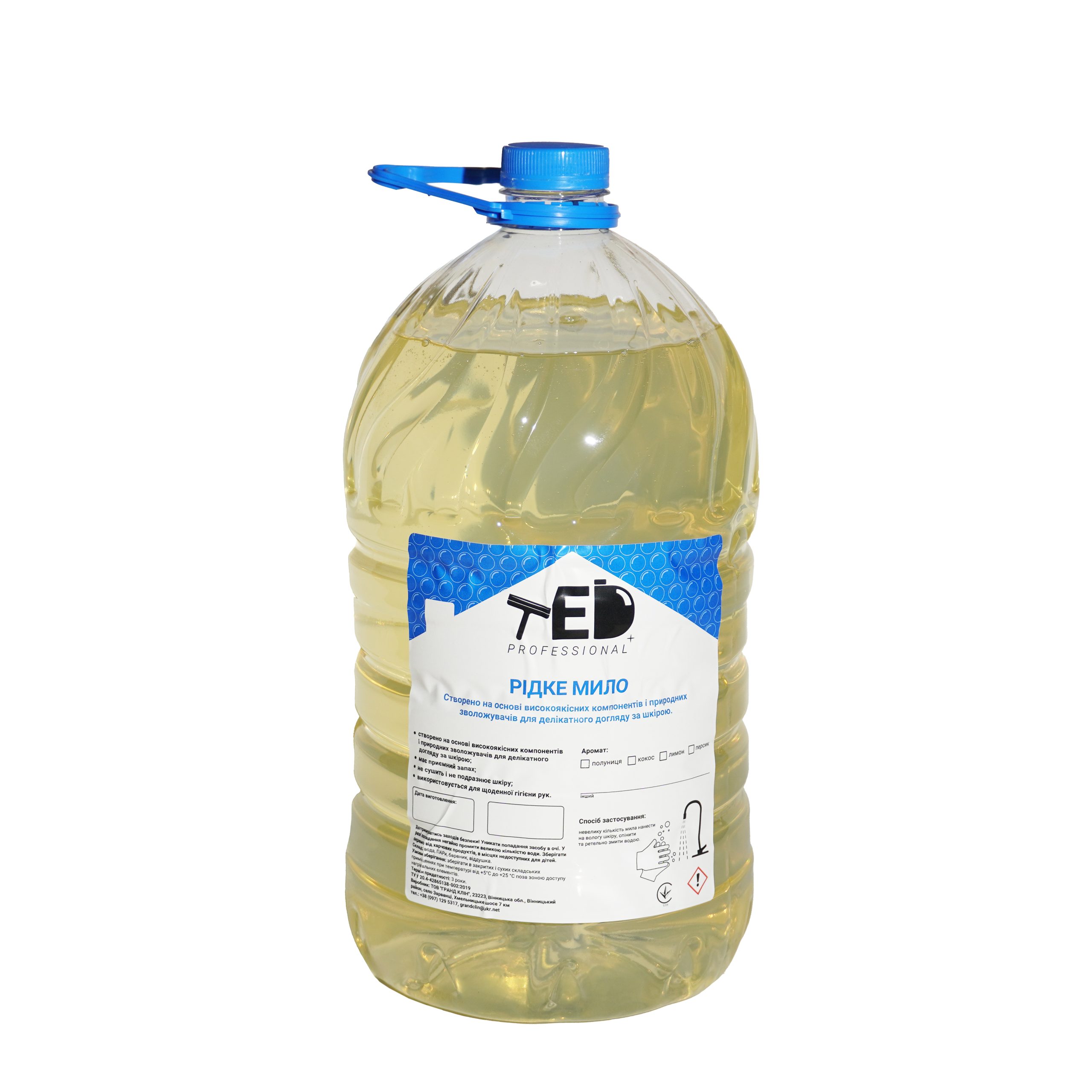
Liquid soap is based on surfactants, which reduce the surface tension of water and help partially emulsify dirt. It is effective against light organic stains, dust, and sweat.
However, when it comes to technical lubricants, its effectiveness drops sharply. The reason is that the concentration of active ingredients in soap is insufficient to break down complex hydrocarbon structures. As a result, some of the contaminants remain on the skin even after repeated washing.
TED Professional Liquid Soap
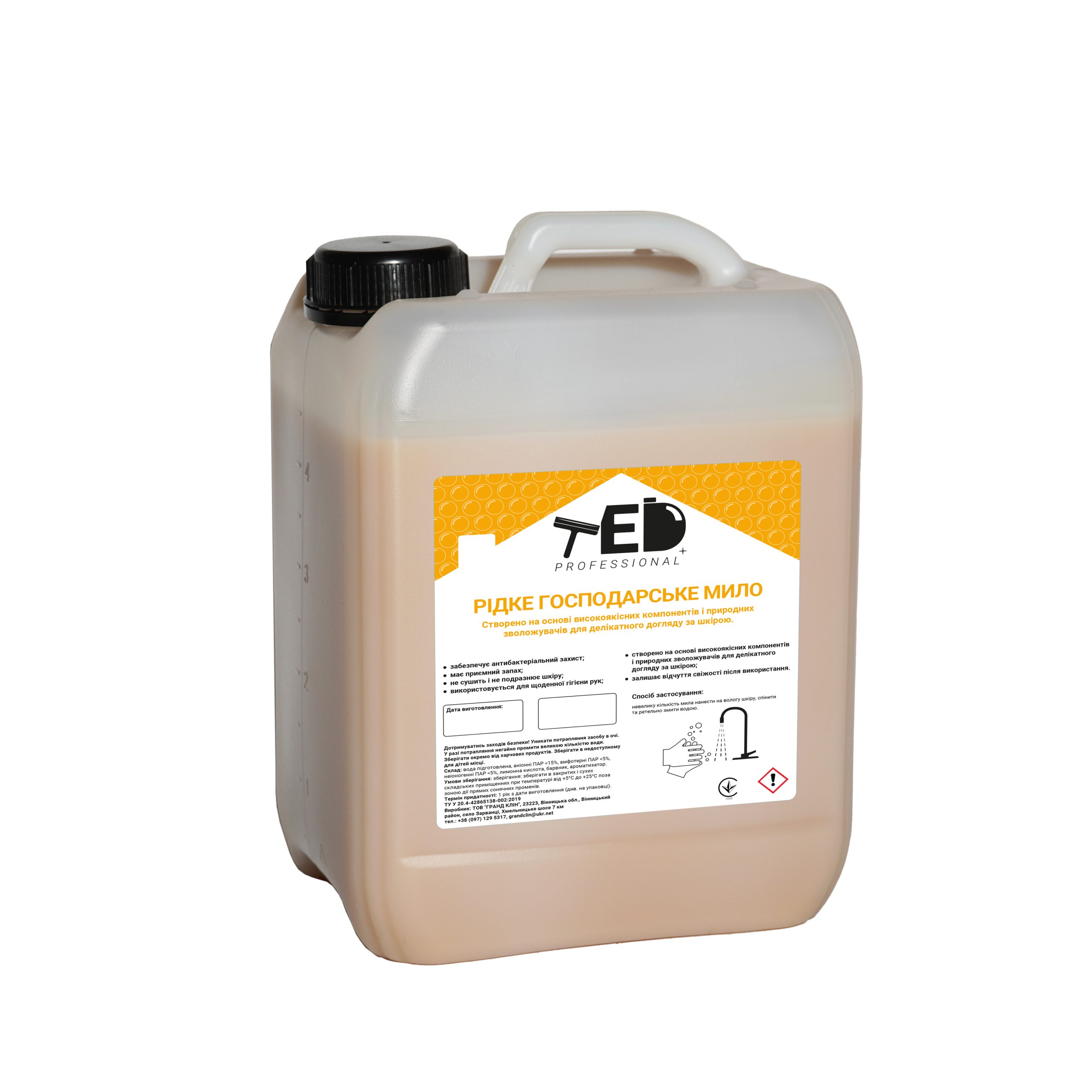
Price range: from 180 ₴ to 200 ₴Select options This product is available in several variations. You can select the options on the product page.TED Professional Liquid Household Soap – Antibacterial
Price range: from 200 ₴ to 220 ₴Select options This product is available in several variations. You can select the options on the product page.
How Hand Cream Works
Hand paste is a specialized product that combines chemical and mechanical action. It contains not only surfactants but also abrasive components that physically help remove dirt from the skin.
In addition, modern formulas contain solvents and emulsifiers that effectively break down fuel oil and lubricants. It is precisely because of this that the paste provides a much deeper clean compared to regular soap.
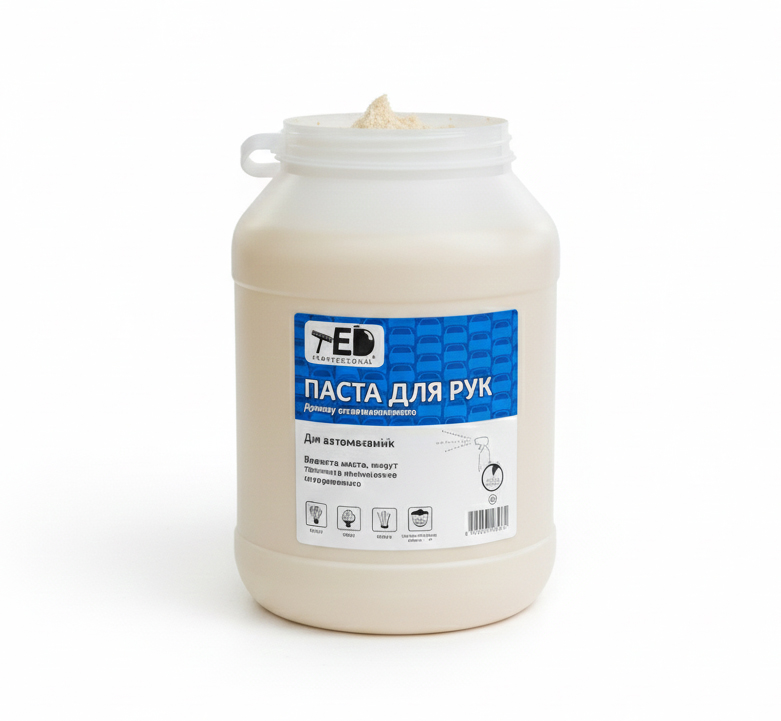
Hand Cream
460 ₴Select options This product is available in several variations. You can select the options on the product page.
Key Difference: Cleaning Mechanism
The main difference between toothpaste and soap lies in their mechanism of action. Liquid soap works exclusively through chemical action, whereas toothpaste uses a combined approach—chemical plus mechanical.
This is especially important in auto service centers, where contaminants have a complex structure and often penetrate microcracks in the paint. The paste effectively removes even deeply embedded particles.
A Practical Example from a Service Station
In my practice, I worked with a car repair shop where the mechanics used only liquid soap. Despite washing their hands regularly, a distinctive dark film from the oils remained on their skin at the end of the workday.
After switching to a professional hand cleanser, the situation changed dramatically. Cleaning time was cut nearly in half, while the quality of cleaning improved significantly. Employees also noted less skin irritation thanks to proper cleaning.
Effects on the Skin: Safety and Comfort
It is important to understand that improper cleansing can be more harmful than using the right product. Residues of oils continue to affect the skin even after washing.
Modern hand soaps contain skin-care ingredients that counteract the harsh effects of dirt and grime. This not only cleanses but also protects workers' skin.
Cost-Effectiveness for Businesses
In terms of cost, the paste may seem more expensive. However, when you consider its cleaning effectiveness and the fact that it goes further, it is more cost-effective in the long run.
Lower consumption, faster cleaning, and a reduced risk of dermatological problems—these are direct benefits for the company.
When there is enough liquid soap
Liquid soap has its place in manufacturing processes. It is suitable for light soiling, office use, or as a follow-up to primary cleaning.
However, when working with lubricants, fuel oil, and industrial fluids, using it as the primary agent is insufficient.
TED Professional Liquid Soap
Price range: from 180 ₴ to 200 ₴Select options This product is available in several variations. You can select the options on the product page.TED Professional Liquid Household Soap – Antibacterial
Price range: from 200 ₴ to 220 ₴Select options This product is available in several variations. You can select the options on the product page.
A Professional Approach to Hand Sanitization
In my work, I always recommend a combined approach. The initial cleaning is done with toothpaste, after which, if necessary, you can use mild soap to finish the process.
It is also important to use professional-grade products designed for industrial environments. For example, specialized cleaning solutions can be found in the category pages on the TED Professional website, which features products for various types of stains.
Hand Cream or Soap: The Expert's Final Conclusion
As a process engineer, I can say with confidence that when it comes to removing fuel oil and graphite lubricants, hand paste is significantly more effective than liquid soap. This is due to both its composition and its mechanism of action.
For service stations and manufacturing facilities, the choice is clear—professional-grade paste ensures high-quality cleaning, saves time, and protects the skin. It is precisely this approach that allows for maintaining a high level of hygiene and operational efficiency.
Hand Cream
460 ₴Select options This product is available in several variations. You can select the options on the product page.
Frequently Asked Questions
Which is better for removing fuel oil—hand soap or liquid soap?
Hand cleaner is significantly more effective because it combines the chemical action of surfactants with mechanical cleaning provided by abrasive components, which allows it to remove even deep-seated oil stains.
Why doesn't liquid soap work on graphite lubricants?
Graphite-based lubricants contain solid particles that penetrate the skin's micro-relief. Liquid soap has no mechanical action and therefore cannot completely remove them.
Does hand cream harm the skin if used frequently?
Modern professional toothpastes contain emollients that counteract the effects of abrasives and protect the skin from drying out with regular use.
Can I use toothpaste with liquid soap?
Yes, that's the best routine. Toothpaste is used for deep cleaning, and liquid soap is used for the final step and daily hand hygiene.
Which is more cost-effective for a service station—paste or soap?
Despite its higher price, the paste is more economical to use because it requires less product and reduces the time employees spend washing their hands.