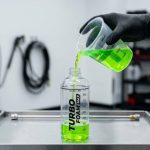

As a technologist specializing in industrial and household chemicals, I often hear the same question: why does a white film remain on the dishes after a wash cycle? Most users blame poor-quality dish detergent or a malfunctioning dishwasher. In reality, however, the cause lies in a combination of physical and chemical processes: water hardness, drying dynamics, and the absence of specialized auxiliary components.
White residue isn’t just a cosmetic flaw. It’s an indicator of an imbalance in the hydrochemical balance inside the dishwasher. In this article, I’ll explain what happens to dishes at the molecular level and how professional adjustment of the dishwasher system solves this problem.
Comment from the process engineer
In 80% of cases, white residue is not a machine malfunction. It is the result of an incorrect chemical cleaning regimen. Most problems can be resolved by adjusting the ion exchanger settings and adding a high-quality rinse aid to the daily cycle.
The Chemical Nature of White Deposits
Scientifically speaking, white scale is a mineral deposit consisting mainly of calcium and magnesium carbonates. These are present in any “hard” water. When heated, the solubility of these salts decreases, and they precipitate out. During the wash cycle, they form a solution, and during the final drying cycle, they crystallize directly on the surface of the dishes.
Water Hardness as a Critical Factor
Water hardness is a direct measure of the concentration of calcium and magnesium ions. The higher this value, the faster limescale builds up. Modern dishwashers have built-in ion-exchange systems designed to “soften” the water by replacing calcium ions with sodium ions using a special salt.
However, if the system’s settings do not match the actual water hardness levels in your area, the dishwasher simply won’t “detect” the problem, and mineral deposits will inevitably build up on the dishes.
Why Cleaning Products Are Not a One-Size-Fits-All Solution
The tablets and powders are designed to address the primary objective— the breakdown of organic contaminants (fats, proteins). They are not designed to control water mineralization during the drying phase.
Even premium “all-in-one” tablets may not be able to handle hard water if the machine’s ion exchanger is depleted. The detergent cleans, but it doesn’t affect how water droplets run off.
The Role of Mouthwash: The Mechanism at the Molecular Level
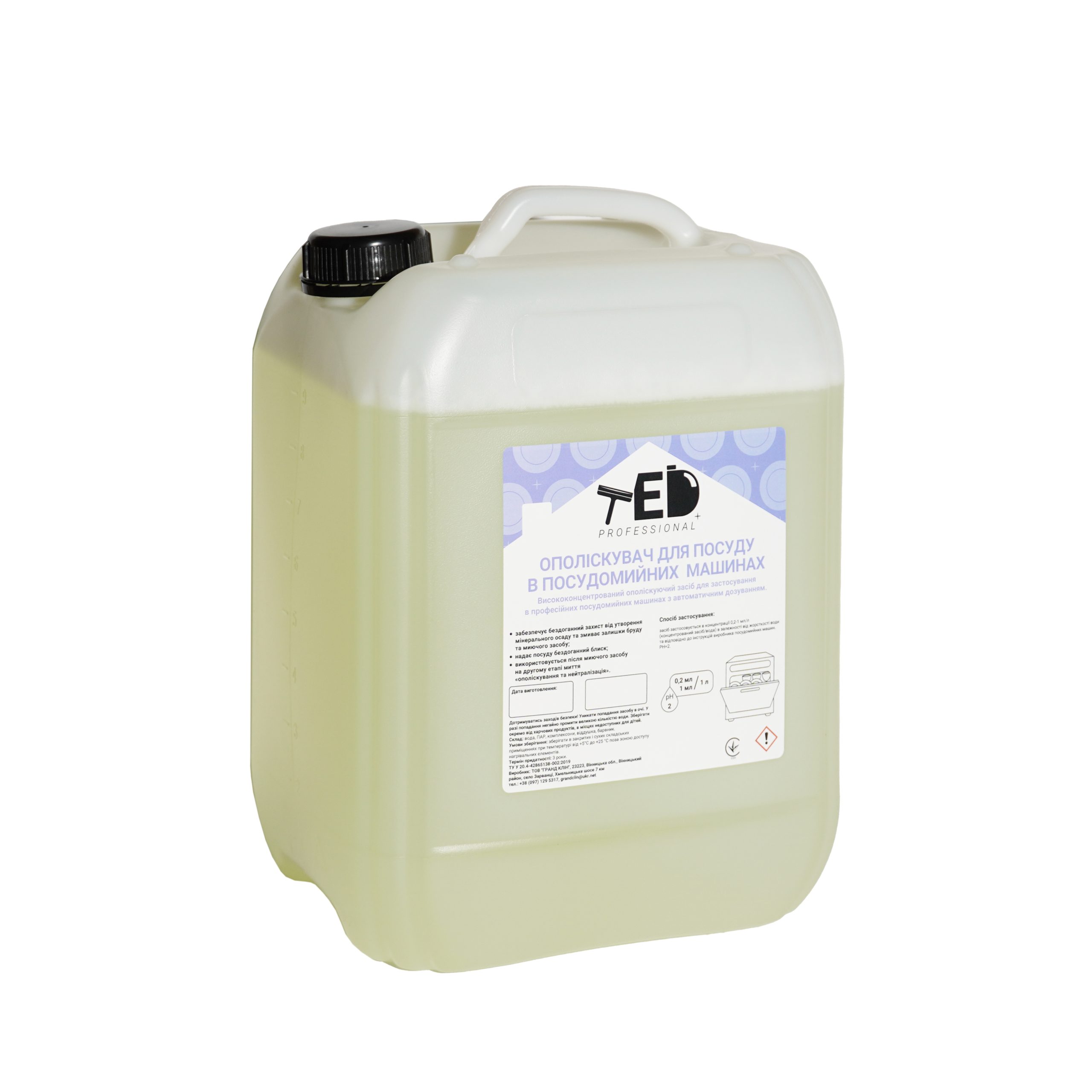
A rinse aid is a concentrate of surfactants that radically alter the physical properties of water’s interaction with a surface. Its main function is to reduce the surface tension of water.
Without rinse aid, water forms droplets on the dishes (due to high surface tension). After the water evaporates, a mineral “ring” remains where each droplet was. With rinse aid, the water forms a thin film that runs evenly off the surface, leaving no marks.
TED Professional Dishwasher Rinse Aid
1250 ₴Select options This product is available in several variations. You can select the options on the product page.
Common User Mistakes
As an expert, I’ve identified five reasons that undermine the effectiveness of washing:
- Ignoring the mouthwash: Users consider it optional.
- Incorrect salt dosage: The water softening level is not adjusted for the region.
- Cheap, all-purpose products: an imbalance of ingredients.
- Overloading the machine: impaired water circulation.
- Using quick-acting products for stubborn stains.
How to Solve the Problem: A Step-by-Step Guide
- Determine the actual water hardness (using test strips or data from the water utility).
- Check the water softening settings in the machine's settings.
- Make sure the salt compartment is full.
- Use high-quality household cleaning products that are suitable for your region.
- Adjust the rinse aid flow rate (start with the medium setting).
Why This Is Important for the Longevity of Cookware
White scale isn’t just an aesthetic problem. Mineral deposits gradually become abrasive. This is especially true for crystal, thin glass, and glazed ceramics. The regular buildup of salts creates microcracks, which over time make the surface porous and dull.
Career Summary
White residue is a controlled physicochemical process. The biggest mistake is to think of a rinse aid as optional. In a professional care system, it is an essential component that provides the final shine and protection.
Using high-quality cleaning products in combination with the proper equipment settings guarantees results that meet the standards of professional kitchens.
TED Professional Dishwasher Rinse Aid
1250 ₴Select options This product is available in several variations. You can select the options on the product page.
Frequently Asked Questions
Why does a white film appear on dishes after washing them?
This is a result of high water hardness. As water droplets dry, mineral salts (calcium and magnesium) crystallize on the surface, forming a cloudy mineral deposit.
Does mouthwash really affect the formation of plaque?
Yes, the rinse aid reduces the surface tension of water. This allows it to run off in an even film without forming droplets that leave mineral deposits after evaporation.
Is it enough to use "all-in-one" pills?
The tablets effectively remove organic contaminants, but they do not control the drying process. For a perfect shine and streak-free results, adding a separate rinse aid is essential.
Why put salt in the dishwasher?
The salt regenerates the ion-exchange resin, which softens the water directly inside the machine. Without it, the water remains hard, which automatically causes scale buildup.
Does this buildup damage glassware?
That's right. Over time, mineral deposits become micro-abrasives that can cause clouding and micro-cracks on delicate glass and crystal.