The operating profitability of self-service car washes (SSCWs) and traditional detailing bays depends directly on the accuracy of chemical usage. In an effort to increase profit margins, owners often make a common mistake—they simply reduce the flow rate of the dosing system or purchase cheap, concentrated products of questionable quality. The result is predictable: a decline in cleaning performance, a white static film on the car’s body, and an exodus of dissatisfied customers.
The technical department at TED Professional conducted audits of existing car wash facilities and demonstrated that it is entirely possible to reduce the consumption of car wash chemicals by 25–35% without compromising quality. This requires not just experimenting with dosages “by eye,” but rather proper equipment calibration, water treatment, and process control.
Why does increasing the foam concentration not improve cleaning performance?
The main mistake many car wash operators make is the belief that the thicker the solution, the better the car will be cleaned. Every professional car wash chemical has a threshold of effectiveness. Once the working solution reaches the optimal concentration of surfactants, adding more chemical no longer improves dirt removal.
If you increase the dosing rate on the dosatron from 2% to 4%, the overuse is 100%, while the cleaning quality remains the same. The excess chemical is simply washed down the drain. In addition, an overconcentrated solution makes the foam too heavy, causing it to run off the vehicle’s body in 30–40 seconds instead of the required 2–3-minute dwell time. TED Professional ’s professional-grade formulas are designed to break down dirt as effectively as possible at the lowest possible dilution rates.
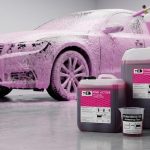
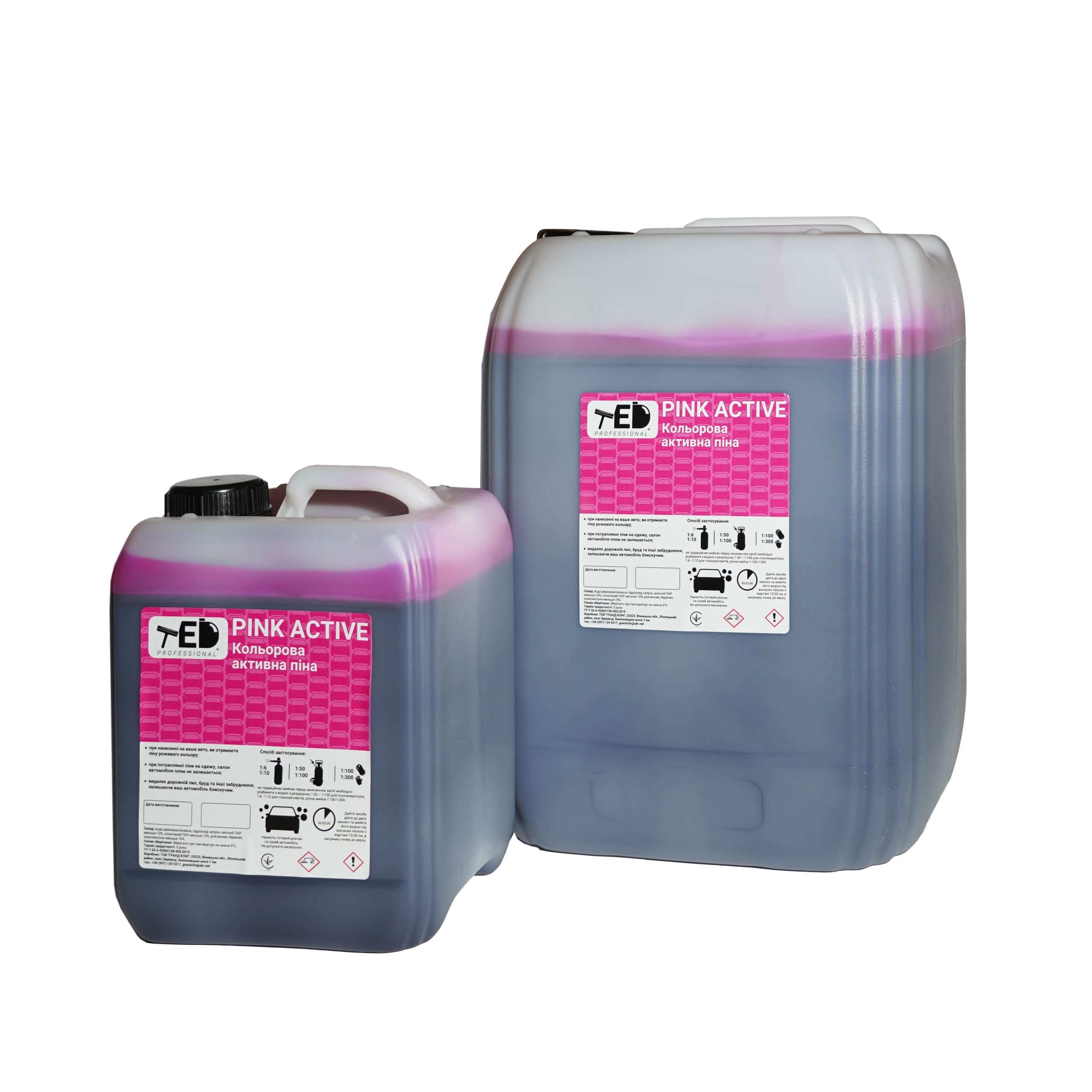
Pink Active Foam – 1:100–1:300 (concentrate)
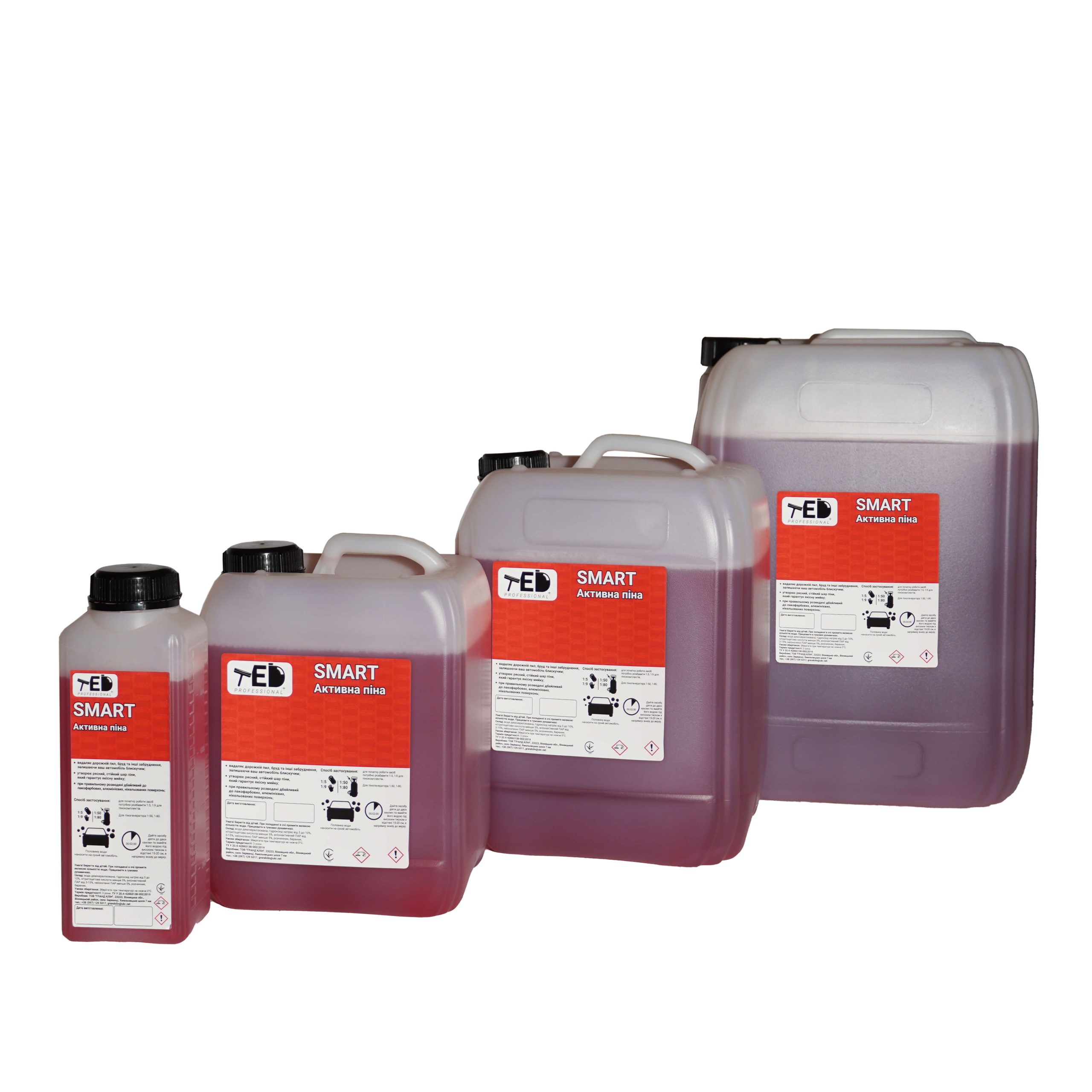
Price range: from 350.00 ₴ to 3,905.00 ₴Select options This product is available in several variations. You can select the options on the product page.Smart Active Foam – 1:50 – 1:80 (concentrate)
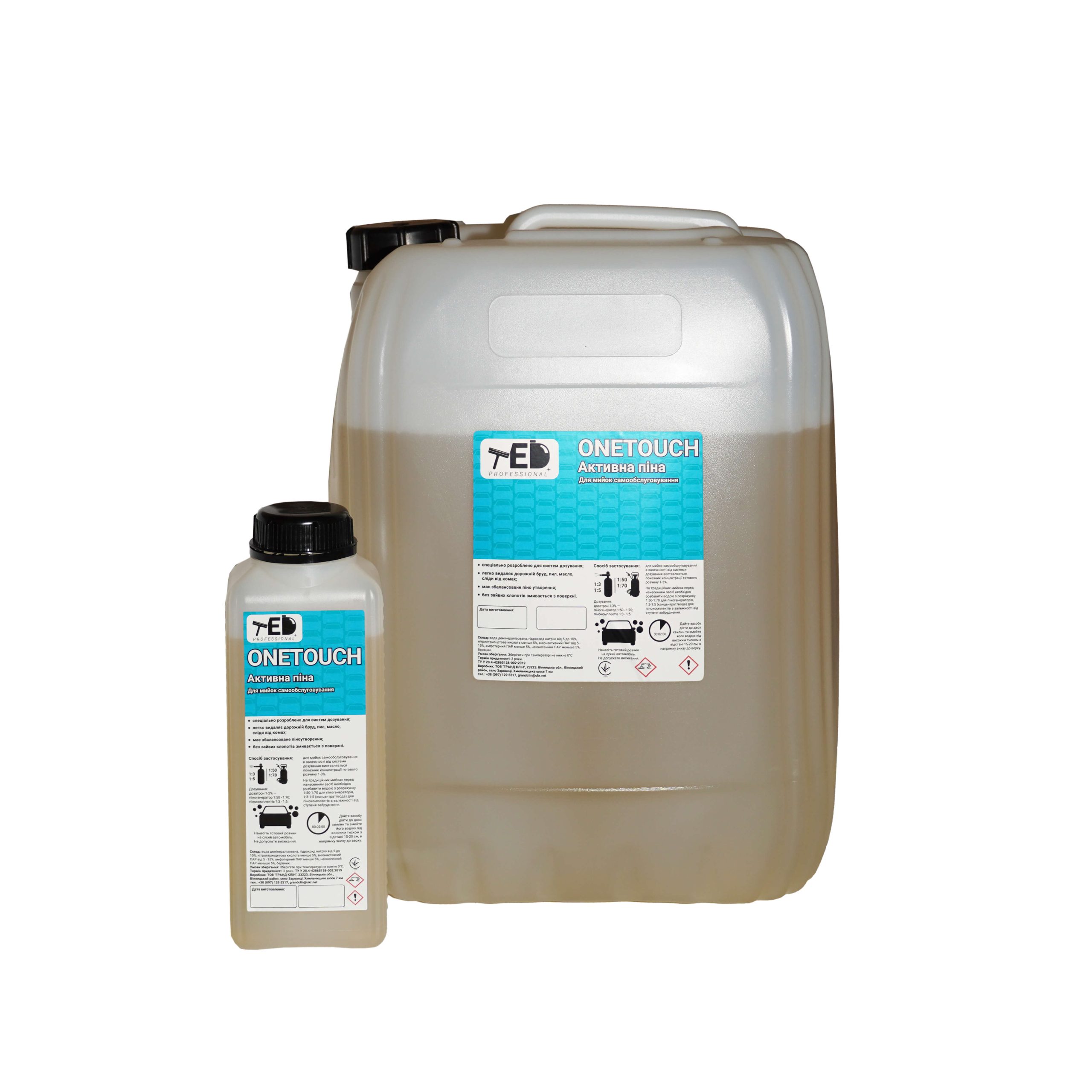
Price range: from 180.00 ₴ to 2,193.00 ₴Select options This product is available in several variations. You can select the options on the product page.OneTouch Active Foam – 1:50–1:70 (concentrate)
Price range: from 130.00 ₴ to 1,390.00 ₴Select options This product is available in several variations. You can select the options on the product page.
How hard water renders automotive chemicals ineffective and increases costs
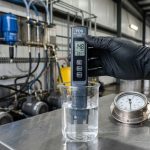
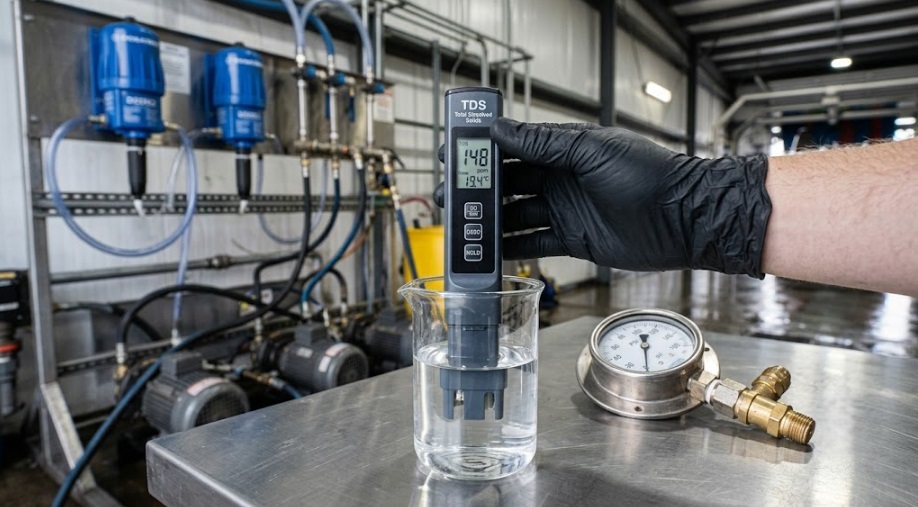
Unfiltered water with a high content of calcium and magnesium salts (more than 8–10 mg-eq/L) is the main cause of excessive car shampoo consumption. Hardness salts immediately bind the active cleaning agents into an insoluble precipitate.
As a result, up to 40% of the concentrate used is not spent on removing dirt from the car, but on neutralizing the salts in the water itself. To wash the car body in hard water, operators are forced to increase the chemical flow rate by 1.5–2 times. Installing a water softener pays for itself in 4–6 months solely through savings on chemicals, while also protecting the car wash pumps and heating elements from scale buildup.
| Type and Quality of Water Treatment | Water hardness (mg-eq/L) | Required foam concentration (%) | Average concentrate consumption per vehicle (ml) | Chemical loss due to salt neutralization (%) |
|---|---|---|---|---|
| Raw well water (untreated) | 10.0 – 14.0 | 3.0% – 4.0% | 180–240 ml | 45% – 55% |
| Partially filtered (network) | 6.0 – 8.0 | 2.0% – 2.5% | 120–150 ml | 20%–30% |
| Softened water (Na-cation exchange) | 1.0 – 2.0 | 1.2% – 1.5% | 80–100 ml | 3%–5% |
| Osmotic Water (Reverse Osmosis) | 0.1 – 0.3 | 0.8% – 1.0% | 50–70 ml | 0% |
Technical Audit of Equipment: Where the Sink Is Losing Money
Even with high-quality water and professional-grade chemicals, money can go down the drain due to equipment malfunctions:
- Wear on dosing valves and check valves: Worn seals and piston rings in volumetric dosing valves lead to calibration drift. The dosing valve scale may indicate 1.5%, while the actual withdrawal can reach 3%. Check the dosing accuracy monthly using the weighing method (comparative measurement of the canister’s weight after 10 operating cycles).
- Clogged foam tablets (aerators): The stainless steel mesh in the foam gun becomes clogged with deposits over time. Air stops mixing with the solution, and the gun dispenses a liquid emulsion instead of foam. Regular ultrasonic cleaning or replacement of the tablets costs next to nothing compared to the cost of wasted chemicals.
- Wear and Tear on Car Spray Nozzles: Spray nozzles wear out and become eroded over time. Outlet pressure drops, droplet size increases, and a significant portion of the chemical solution is sprayed past the car’s body. Replacing the nozzles in a timely manner can save up to 15% of the working solution.
Using Foam Boosters
An effective method for optimizing costs without increasing the solution's aggressiveness is the use of special foam boosters.
Adding 5–10 mL of foam booster per liter of prepared solution increases the density of the foam and extends its retention time on vertical surfaces to 4 minutes. This allows for a 25–35% reduction in the dosage of the main, expensive foam concentrate. At the same time, cleaning performance remains high, and the risk of damage to chrome or aluminum moldings is completely eliminated.
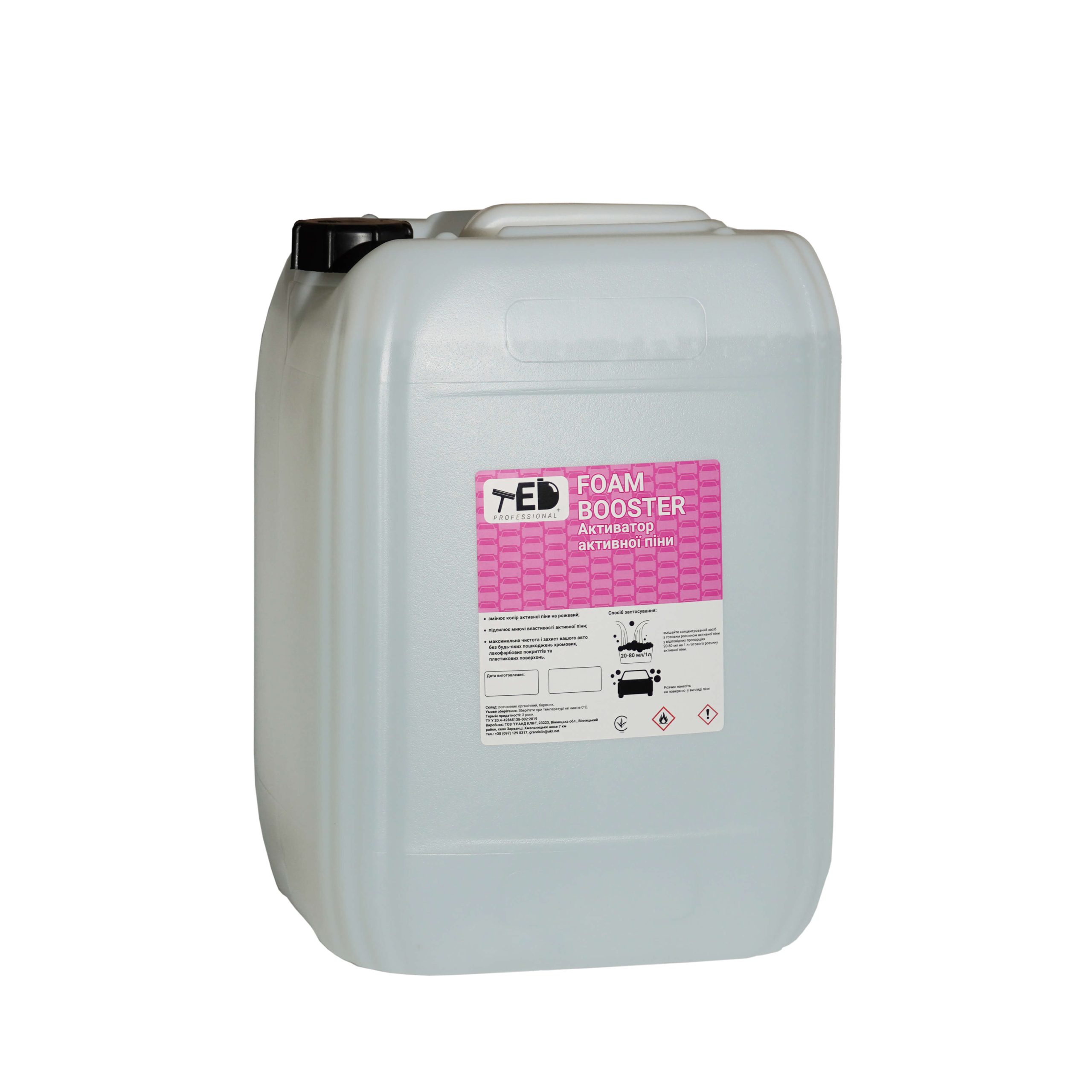
Foam Booster – Pink Foam Activator
Price range: from 1,068.00 ₴ to 3,735.00 ₴Select options This product is available in several variations. You can select the options on the product page.
Staff Supervision and Washing Process Procedures
Uncontrolled actions by dishwashers negate all technical settings. To stabilize production costs, implement these 3 rules:
- Measuring containers: Do not measure chemicals “by eye.” All measurements must be made using a measuring cup.
- Dozatron Lockout: Lock the mechanical chemical feed controls and the MCO control cabinets with locks or seals. Only the designated service engineer is authorized to change the settings.
- Proper application technique: The foam must be applied strictly from the bottom up (sills, doors, hood, roof). This ensures maximum contact time between the product and the dirtiest areas of the car and prevents the formation of dry streaks.
Infographic: Step-by-Step Guide to Optimizing MCO Costs
Follow this 4-step process to reduce your laundry costs in 14 days.
Test your water hardness. If the reading is above 6 mg-eq/L, install a salt-based water softener.
Perform an ultrasonic cleaning of the foam tablets, replace worn-out nozzles, and calibrate the dosing units using the weight method.
Switch to highly concentrated formulations and add foam boosters to save 30% on the base concentrate.
Seal the dispensers, apply the foam using the “bottom-up” method, and ensure the chemical cures for 2–3 minutes.
Economic Model: Comparative Analysis for a 4-Bay Car Wash
Comparative calculation of operating costs for a 4-lane MSO complex (160 vehicles/day, 4,800 vehicles/month) before and after the engineering work:
| Operating Expense Ratio | Before Optimization (Standard Approach) | After comprehensive optimization | Economic Impact |
|---|---|---|---|
| Water Hardness | 9.0 mg-eq/L (Raw water) | 1.2 mg-eq/L (softened water) | A 7.5-fold reduction in stiffness |
| Foam concentration in the solution | 3.5% (Overestimated) | 1.2% + 0.3% Foam Booster | A 65% reduction in chemical usage |
| Chemical consumption per car | 180 ml of concentrate | 60 mL of concentrate + 8 mL of booster | A 3-fold reduction in consumption |
| Cost of chemicals per car | 18.50 UAH | 8.20 UAH | -55.6% savings on a car |
| Monthly chemical costs (4,800 vehicles) | 88,800 UAH | 39,360 UAH | Savings: 49,440 UAH per month |
| Average time to wash 1 car | 7 min 30 sec | 5 min 45 sec | A 23% increase in throughput |
Optimization Checklist for Car Wash Owners:
- Test the water hardness at the outlet of the dosing unit.
- Conduct a control weighing test to measure chemical absorption in the dosatron units.
- Replace or clean the foam tablets at all stations.
- Use Foam Boosters to reduce the percentage of base foam.
- Seal the metering units and document the "bottom-up" application procedure.
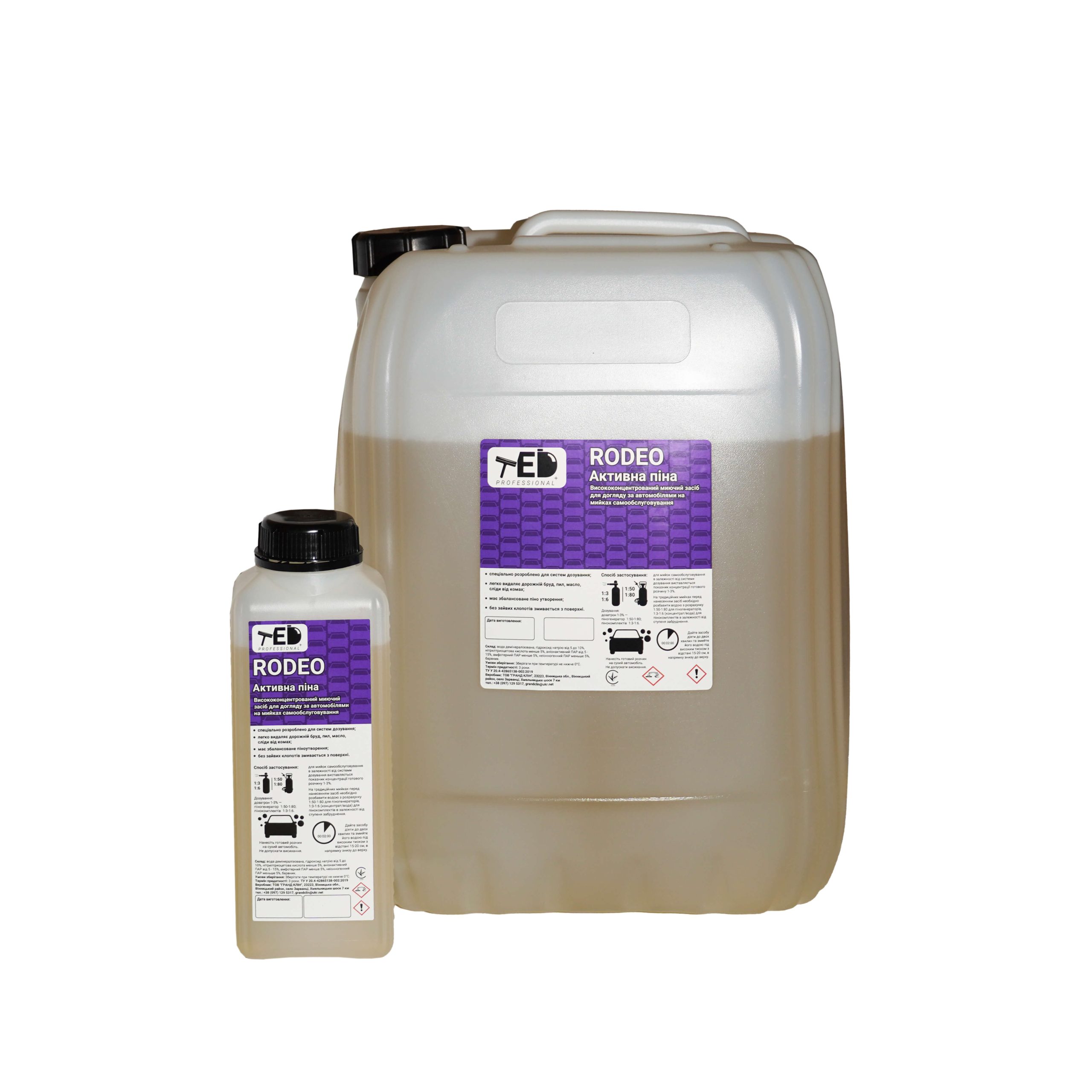
Rodeo Active Foam – 1:50–1:80 (concentrate)
Price range: from 150.00 ₴ to 1,615.00 ₴Select options This product is available in several variations. You can select the options on the product page.Smart Active Foam – 1:50 – 1:80 (concentrate)
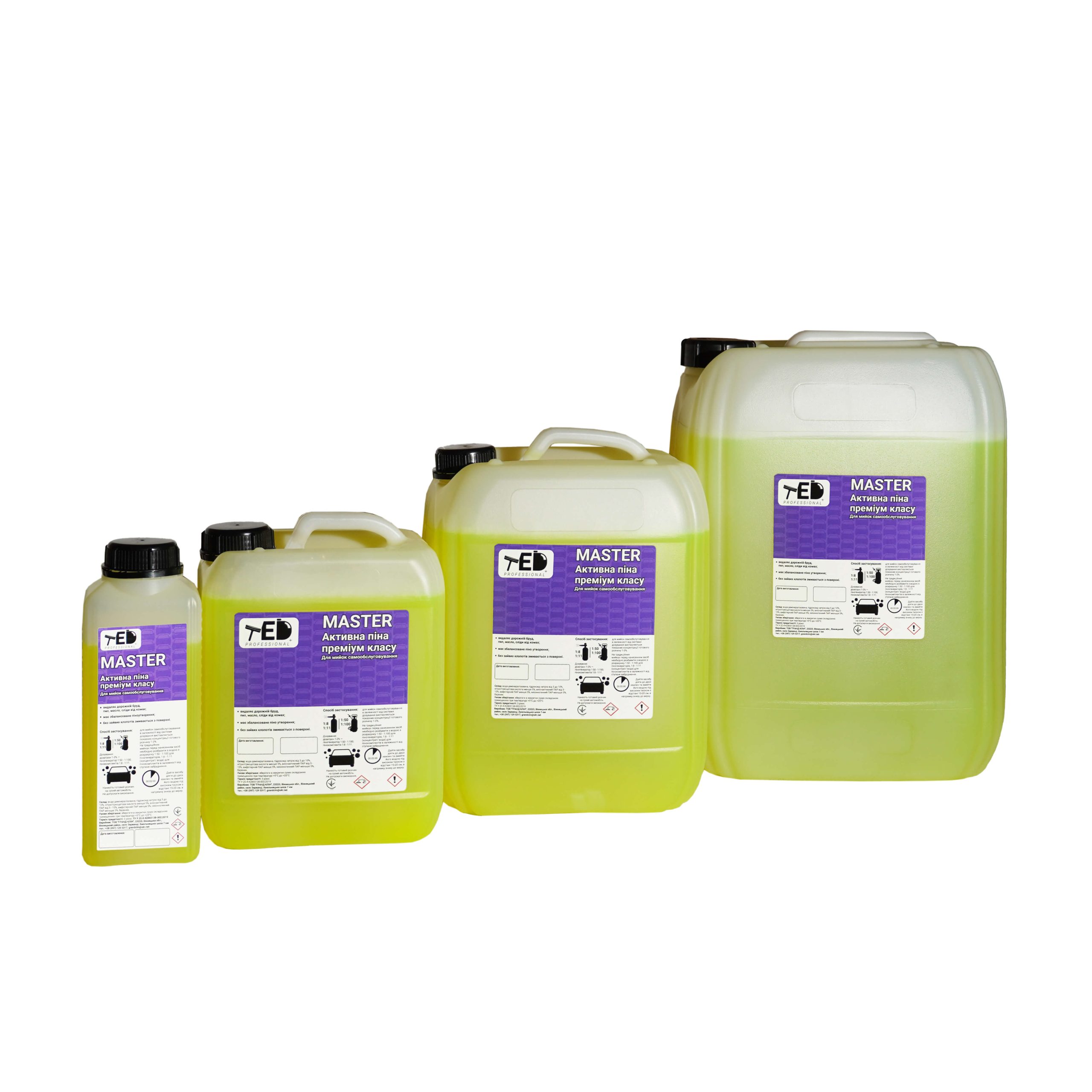
Price range: from 180.00 ₴ to 2,193.00 ₴Select options This product is available in several variations. You can select the options on the product page.Master Active Foam – 1:50 – 1:100 (concentrate)
Price range: from 260.00 ₴ to 2,600.00 ₴Select options This product is available in several variations. You can select the options on the product page.
Frequently Asked Questions
By what percentage can the use of contactless chemicals realistically be reduced without compromising quality?
With a comprehensive engineering approach (water softening, equipment calibration, and the use of foam boosters), the flow rate of the primary active foam concentrate can be safely reduced by 30–50%. At the same time, the quality of contaminant removal and the washing speed actually improve because the surfactants are not deactivated by hardness salts.
Can hard water be compensated for simply by increasing the foam concentration?
Technically, it is possible to wash a car using hard water by increasing the dosage 2–3 times, but this is financially unwise. You’ll end up spending a huge amount of money on chemicals that simply bind with calcium to form an insoluble precipitate. It’s much cheaper to install a water softener once than to overpay tens of thousands of hryvnias every month for excess concentrate usage.
How often should dosatrons be inspected and calibrated?
It is recommended to check absorption using the gravimetric method at least once a month. If the brand of active foam or the density of the concentrate changes, or after repair work is performed on the water supply line, calibration must be performed immediately.
Does the temperature of the process water affect the active foam flow rate?
Yes, temperature significantly affects the kinetic activity of surfactants. When the water temperature is below +10°C, the critical concentration for micelle formation increases, and more detergent is required to achieve the cleaning effect. Heating the working solution to the optimal range of +25…+35°C reduces the consumption of active foam by 15–20% compared to washing with ice-cold winter water.
How does the wear and tear of a foam tablet affect the overuse of active foam?
A clogged or worn-out foam tablet prevents proper aeration, causing the spray gun to dispense a liquid emulsion instead of foam. Operators mistakenly increase the chemical dosage on the dosing unit, even though the problem can be solved simply by replacing the tablet or cleaning it with ultrasound.
What are foam boosters used for?
Foam boosters create intermolecular synergy with the main anionic surfactants, enhancing foam density and adhesion. This makes it possible to reduce the concentration of the main, expensive concentrate by 25–35% without compromising cleaning power or foam density.
Why is it important to apply the active foam from the bottom up?
The bottom-up application technique ensures maximum contact time between the chemical solution and the most heavily soiled lower body parts. In addition, the foam creates a cushioning layer and prevents dry streaks from forming on the clear coat.
How can we protect dosatrons from unauthorized reconfiguration by operators?
To eliminate human error, the dosatron adjustment rings and technical rooms are secured with mechanical locks or seals. Only the designated process engineer is authorized to adjust the feed percentage after measuring water hardness.