Modern wheel rims have long since ceased to be mere cast aluminum parts, now serving as complex elements of design and engineering protection for the braking system. Manufacturers use powder coatings, diamond-polished finishes, satin and matte baked-on enamels, anodized coatings, and complex multi-component alloys. Caring for such surfaces requires a professional approach, as choosing the wrong automotive chemicals can instantly lead to irreversible damage to the outer layer and significant financial losses.
The main goal when washing wheels is to quickly and safely remove stubborn, baked-on dirt without damaging the paint finish or brake system components. Owners of car wash facilities, detailing studios, and discerning car owners are constantly faced with a choice between two fundamentally different classes of products: highly effective acid-based cleaners for deep restoration and pH-neutral formulations for regular maintenance. Our editorial team and the developers at TED Professional have prepared this technical guide to help you properly harness the power of acidic formulations and achieve maximum results without making risky mistakes.
We are convinced that there is no “one-size-fits-all” solution for professional car care. The choice of cleaning products should be based on a clear understanding of the specific types of contaminants on the surface, the material the wheel is made of, and the protective coatings applied to it. In this article, we’ll take a detailed look at the chemistry behind these processes, assess the risks to structural materials, and help you develop a safe and highly effective wheel cleaning protocol.
How to Clean Baked-On Brake Dust and Rust from Brake Rotors
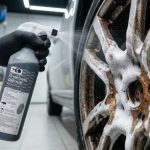
The dirt on wheel rims is significantly different from ordinary city dust or the organic film on a car’s body. The main and most challenging component of this contamination is brake dust, which is produced when brake pads rub against a cast-iron or steel rotor. This dust consists of microscopic particles of iron, carbon compounds, copper, synthetic resins, and fillers, which heat up to extreme temperatures under friction.
During hard braking, the temperature at the point of contact between the brake pad and the rotor can easily reach relatively high levels, ranging from 300 to 600 degrees Celsius. Red-hot metal shavings fly out from under the caliper and literally burn into the soft, transparent clear coat of the wheel. Ordinary car care products or classic active foam are unable to remove these embedded iron particles, as they are held within the clear coat structure due to mechanical and thermochemical bonding.
In addition to iron dust, a mixture of road tar, fuel residues, bitumen, de-icing salts, and limescale from hard water constantly accumulates on the wheels. Under the influence of solar ultraviolet radiation and constant temperature fluctuations, this mixture polymerizes, forming a dense, wash-resistant crust. Removing it requires specialized compounds capable of dissolving or chemically transforming insoluble deposits.
Professional Acid Wheel Cleaner: Maximum Speed and Unbeatable Power Against Rust
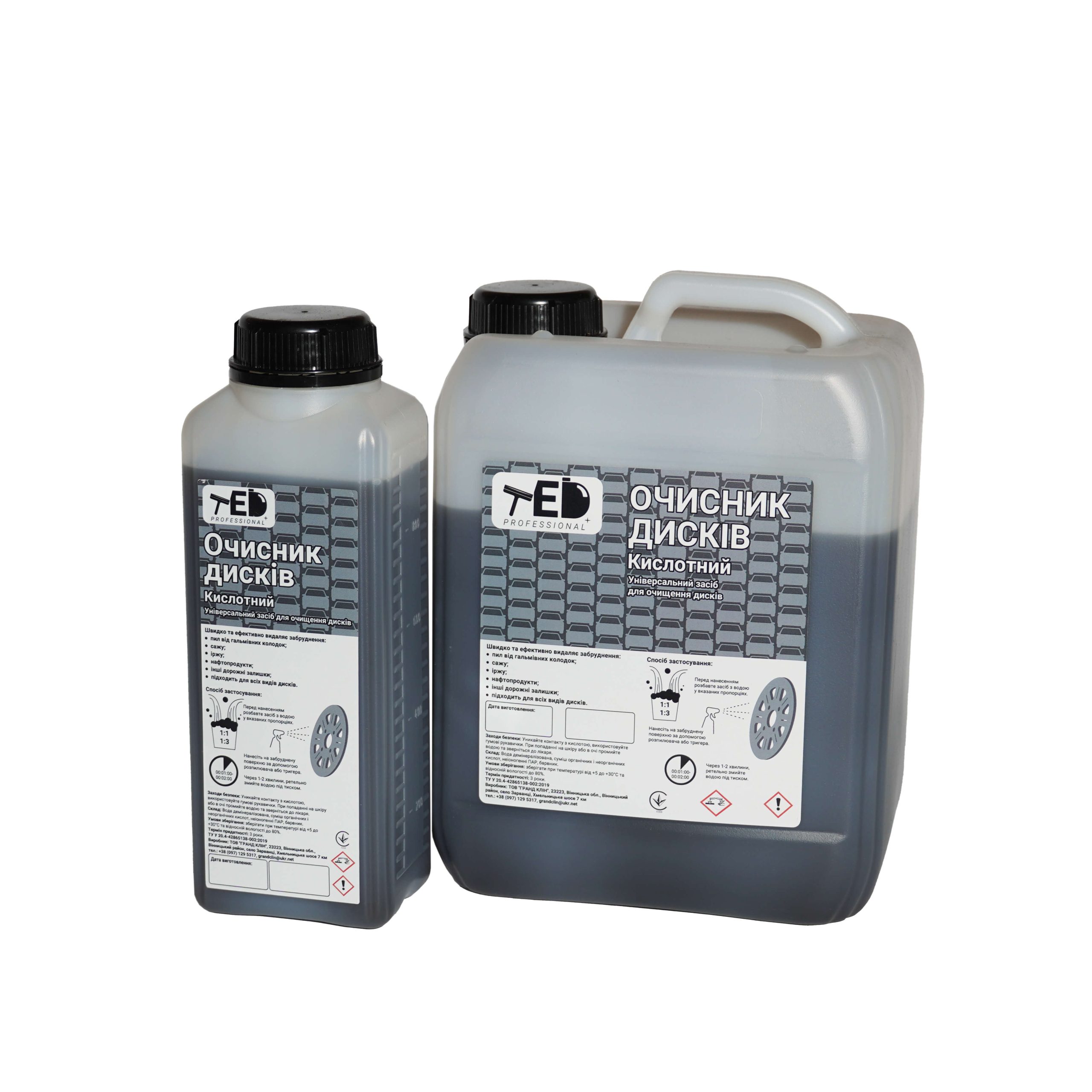
TED Professional ’s professional acid wheel cleaner is designed as a powerful solution for commercial use, where processing speed and low cost per wash cycle are key factors. Our formula is based on a balanced complex of active acids that ensures the direct chemical dissolution of iron oxides and rapid etching of mineral compounds. The formula instantly reacts with rust, lime scale, and metal deposits, converting them into easily rinsable soluble salts.
The main advantage of the TED Professional acid cleaner is its extremely fast action and flawless effectiveness against stubborn water scale, salt deposits, and baked-on brake dust on steel or classic painted cast wheels. Unlike mild, neutral cleaners, the acid-based formula restores the wheels to their original appearance in a matter of seconds, whereas other products require a long time and additional mechanical effort.
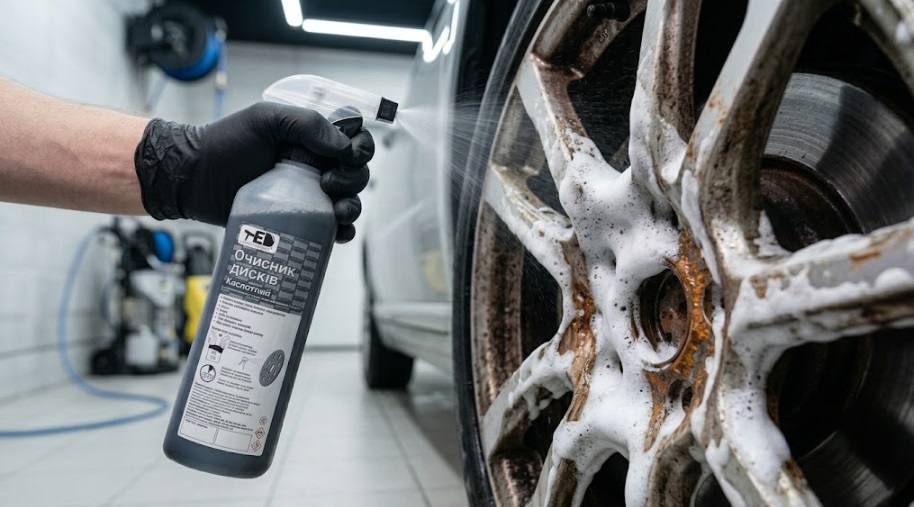
To work safely with acidic cleaning solutions, simply follow these basic operating guidelines: use the discs when they are cool, monitor the dwell time (up to 1–2 minutes), and thoroughly rinse off the chemical with high-pressure water. Following these simple rules ensures that the use of the TED Professional acid cleaner is fully controlled, highly effective, and maximally beneficial for your business.
Acidic Wheel Cleaner – 1:3 (concentrate)
Price range: from 330.00 ₴ to 1,160.00 ₴Select options This product is available in several variations. You can select the options on the product page.
Neutral Disc Cleaner with an Indicator: How It Works and Why It's Safe
The introduction of pH-neutral cleaners for iron and rims marked a technological breakthrough in the automotive care industry. The pH range of these products falls within the safe limits of 6.5 to 7.5. Instead of aggressively etching the metal with acid, these formulations use a chemical chelation process. Their main active ingredient is salts of thioglycolic acid (most commonly sodium or ammonium thioglycolate).
Thioglycolate molecules locate iron particles embedded in the varnish and undergo a localized chemical reaction with them. This results in the formation of a water-soluble chelate complex—iron bis-thioglycolate. This reaction is accompanied by a striking visual effect: the clear or yellowish solution on the disc visibly changes color to dark violet or purple (the so-called Color Changing Effect). This isn’t just a clever marketing ploy, but a clear indicator for the technician that the product is dissolving the metal and can be rinsed off.
The main advantage of pH-neutral cleaners is that they are completely safe for all surfaces. They do not oxidize aluminum, do not damage anodized or chrome-plated parts, and are safe for rubber seals, brake hoses, calipers, and all types of paint finishes. Neutral chelating agents are the only approved class of car care products for vehicles with carbon-ceramic brakes and diamond-ground brake rotors.
The relative disadvantages of neutral descalers include the higher cost of raw materials and a longer reaction time. It takes 3 to 5 minutes for the iron in the formulation to dissolve completely. In addition, neutral descalers are less effective against purely mineral deposits and limescale, since they lack an acidic component to dissolve calcium.
Acidic vs. Neutral Wheel Cleaner: Comparison Chart
To provide a clear comparison of the two classes of wheel rim cleaners, our engineering team at TED Professional has compiled their key specifications into a comparison table:
| Comparison Parameter | Acid Wheel Cleaner | pH-Neutral Cleaner (Chelator) |
|---|---|---|
| pH level of the solution | 1.0 – 2.5 (Strongly acidic environment) | 6.5–7.5 (Neutral environment) |
| Main Mechanism of Action | Chemical Etching and Dissolution of Oxides | Iron chelation (complex formation) |
| Reaction speed | High (30–60 seconds) | Moderate (3–5 minutes) |
| Visual indicator | None (foaming may occur) | Color change to purple/violet |
| Safety Guidelines for Aluminum and Chromium | Requires time management (up to 1–2 minutes) | Absolute 100% safety |
| Safety for Carbon-Ceramic Brakes (CCB) | Not recommended | Fully permitted and safe |
| Removing Limescale | Dissolves calcium salts very well | Low effectiveness against lime |
| Cost of the washing cycle | Low (maximum savings) | Medium / High |
How to Choose a Wheel Cleaner Based on the Type of Finish
To avoid mistakes when choosing automotive cleaning products, we recommend making sure the type of cleaner is specifically suited to the material and finish of the wheel:
- Standard painted wheels (factory powder coat): For deep, quick, and cost-effective cleaning, use TED Professional acid cleaner. It’s perfect for removing winter grime and limescale.
- Diamond-Cut Discs: Use pH-neutral cleaners or strictly control the contact time of acidic solutions when applying them to specific areas, making sure they do not dry out.
- Matte and satin wheels: Use products that do not contain gloss enhancers or waxes. Harsh chemicals must be rinsed off quickly to preserve the paint’s original satin finish.
- Polished, uncoated aluminum and anodized wheels: Use only specialized, mild, pH-neutral chelating agents. The use of acidic solutions on bare metal is strictly prohibited.
- Vehicles with ceramic brakes (CCB): Use only certified neutral iron removers. Before applying the product, make sure the brake rotor has cooled completely.
Step-by-Step Guide: How to Wash Your Wheel Rims Properly and Safely
Proper application and rinsing techniques ensure that no damage occurs and that the cleaning effect is maximized. Our company’s experts have developed the following guidelines:
Follow this step-by-step guide to safely clean your wheel rims.
Make sure the rotors and calipers have cooled completely. Applying the chemical to a hot wheel causes the product to burn immediately and results in thermal shock to the metal.
Use a high-pressure water jet to wash away the top layer of sand and loose soil so that the chemicals can reach the embedded iron.
Spray the product evenly onto the front surface of the rotor, the inner rim, and the caliper. Let the product sit for 1–2 minutes to activate the cleaning formula.
Work on complex geometric areas using a soft brush or a detailing brush. Thoroughly rinse off any remaining chemicals with plenty of pressurized water.
The expert's final verdict
To summarize this comparative analysis, we can formulate a clear rule for car washes and detailing studios: if your priorities are maximum cleaning speed, effective removal of heavy calcium deposits and stubborn rust, and the lowest possible cost per service, TED Professional’s acid wheel cleaner is the undisputed leader.
Its professional formula ensures flawless cleaning in situations where neutral cleaners require too much time and additional costs. Incorporating the TED Professional acid cleaner into your car wash facility’s workflow allows you to significantly speed up the service process for each vehicle and increase your business’s net profit.
Checklist for Safe Wheel Cleaning for Mechanics:
- Always check the temperature of the brake disc before applying any chemicals.
- Determine the type of wheel finish (diamond-ground, matte-coated, or anodized).
- Use TED Professional acid cleaner to quickly remove heavy mineral deposits.
- Do not allow the compounds to dry out on the wheel surface when exposed to direct sunlight.
- Rinse the inner rim of the disc and the calipers with a generous amount of clean water under pressure.
Acidic Wheel Cleaner – 1:3 (concentrate)
Price range: from 330.00 ₴ to 1,160.00 ₴Select options This product is available in several variations. You can select the options on the product page.
Frequently Asked Questions
Can an acidic disc cleaner be used on a regular basis?
Yes, when used in accordance with the instructions (application on cooled surfaces, a 1–2-minute dwell time, and thorough rinsing under pressure), the TED Professional acid cleaner can be safely used in commercial dishwashers for quick cleaning of dishes.
Why does a pH-neutral wheel cleaner turn purple?
The color change to violet or purple results from a chelation reaction. Thioacetic acid salts react with dispersed iron particles to form a water-soluble colored complex.
Are pH-neutral cleaners safe for chrome-plated and anodized rims?
Yes, pH-neutral cleaners are completely safe for chrome, anodized aluminum, and diamond-polished rims, since they do not contain harsh acids or alkalis that can cause oxidation.
What should you do if your disc cleaner accidentally dries out in the sun?
If the cleaner has dried, do not try to scrape it off. Reapply a layer of the same cleaner or a neutral car shampoo, wait 1–2 minutes for the film to soften, and rinse thoroughly with plenty of pressurized water.
Can I apply cleaner to hot wheel rims right after driving?
Absolutely not. Applying chemicals to a hot brake disc causes the water to evaporate instantly, causes the active ingredients to burn onto the paint, and can lead to thermal deformation of the brake disc.
What's the best way to remove old lime scale from wheels?
The TED Professional acid wheel cleaner is the most effective at removing mineral deposits, lime scale, and limescale, as it instantly dissolves calcium salts.
Are iron removers suitable for a car's body?
Yes, pH-neutral iron removers are versatile and can be safely used to remove iron particles from a car’s paintwork and glass.
How long should the acid cleaner be left on the discs?
The optimal application time for an acid cleaner is 1 to 2 minutes. This is more than enough time to completely break down the dirt without the risk of the solution drying out.