I regularly advise car owners, professional car wash facilities, detailing centers, and corporate clients on how to properly care for a car’s paint finish. More often than not, I’m asked the same question: why, even after a thorough wash, does the car’s body still end up covered in white spots, dull streaks, or uneven water spots? Most drivers believe the problem is caused by low-quality car shampoo or aggressive foam, although in reality, the situation is much more complex.
Over the years, I have come to realize that the source of most such defects is not the car care products themselves, but rather improper washing techniques, hard water, issues with the drying process, or the lack of a protective coating. That is why even expensive cars sometimes look less attractive than the owner expects after a visit to the car wash. In this article, I’ll explain in detail the physical and chemical causes of stains, break down common mistakes, and show how professional care can help completely avoid this problem.
Commentary by a TED Professional expert
As a TED Professional expert, I always emphasize that the perfect wash result depends not only on high-quality car care products. Equally important are the water’s properties, the temperature of the car’s body, the proper drying technique, and the use of protective coatings. When all these factors work together, the car achieves an even shine without spots, streaks, or dull spots—even after repeated washes.
Why Does the Car Look Worse Than Expected After Washing?
Many drivers are genuinely surprised when, after washing their car, light streaks, round spots, or noticeable smudges remain on the bodywork. This looks particularly unsightly on black, blue, and other dark colors, where even minor imperfections become clearly visible in sunlight. In fact, in most cases, the problem arises after the car has been washed, when the water begins to evaporate from the car’s surface.
When water evaporates, the pure water leaves the car body first, while all the minerals dissolved in it remain on the surface of the paint finish. If the water contains significant amounts of calcium, magnesium, or other hardness salts, they form characteristic light-colored deposits after drying. It is these mineral residues that most drivers perceive as streaks after washing their cars.
The temperature of the car’s body plays an equally important role. If the car is washed after a long drive or in direct sunlight, the water evaporates much faster. As a result, the concentration of mineral components rises sharply, and salt crystals begin to form even before the drying process is complete. Consequently, even a car that has been washed thoroughly may look as if it hasn’t been polished at all.
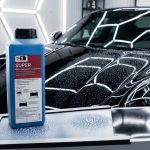
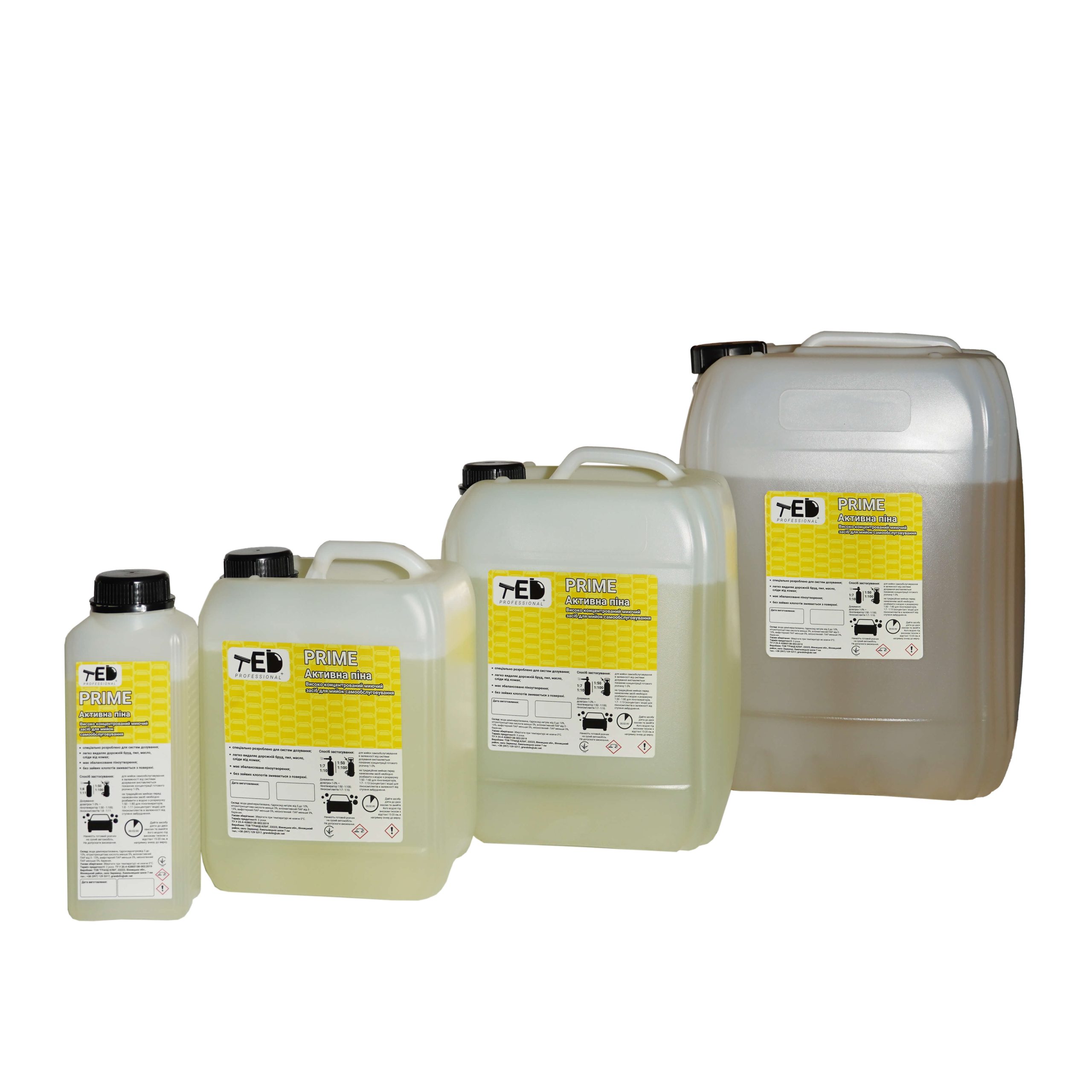
I also often see situations where car owners use TED Professional active foam but then fail to dry the body with a microfiber cloth or leave the car to air dry. It is precisely this step that most often causes unwanted streaks, even though the car care product itself has long since been completely rinsed off the surface.
The main causes of stains after washing
- high hardness of the water used at the car wash;
- residues of mineral salts left after the natural evaporation of droplets;
- washing an overheated or hot car body after a long drive;
- rapid drying of the car in direct sunlight;
- improper or incomplete drying of the paint and varnish coating surface;
- the absence of a protective wax or water-repellent coating on the car body;
- water in the washing system that is not sufficiently purified or treated;
- using dirty wipes, dirty sponges, or worn-out microfiber cloths.
The Physics of Water Spots: How Water Hardness and Composition Cause Stains on a Car's Body
In professional car detailing, the term “water spots” is used to describe such defects. It refers to the spots that remain on the car’s surface after the water has dried. Unlike ordinary dust or road dirt, these deposits form directly as the moisture evaporates and consist mainly of mineral components that were present in the water even before the wash began.
Water containing a high concentration of dissolved calcium and magnesium salts is referred to as hard water. During washing, these minerals are evenly distributed across the car’s surface along with the water. When the water evaporates, the dissolved substances can no longer remain in a liquid state. Once a critical concentration is reached, a crystallization process begins, which forms the characteristic light-colored rings or spots on the paint finish.
In the scientific literature, this process is described as the “coffee-ring effect.” As the droplet dries, fine solid particles always migrate to the periphery of the droplet. Since dark paint and varnish coatings almost completely absorb light waves, while light-colored salt crystals actively reflect them, this contrast makes even the smallest amount of mineral deposits highly visible.
That is why using demineralized water after reverse osmosis systems virtually eliminates this problem. When such purified water evaporates from the car’s surface, it leaves almost no hard water residue behind. Professional car washes use demineralized water for the final rinse, which significantly reduces the number of streaks even without additional polishing of the car.
Which minerals are most likely to cause stains?
| Mineral | Source | Impact on the body |
|---|---|---|
| Calcium carbonate | Hard tap water | It forms a light white coating. |
| Magnesium carbonate | Natural Mineral Salts | It creates a matte finish. |
| Sodium salts | Water after the reagents | They leave salt stains. |
| Silicates | Groundwater | They form solid mineral deposits. |
| Iron | Old pipelines | May leave yellowish marks. |
Main Types of Water Stains
| Type of stains | Reason for formation | Difficulty of removal |
|---|---|---|
| I | Surface mineral deposits left behind after the water has dried up. | Low. |
| II | Thick salt deposits that had remained on the car body for a long time. | Average. |
| III | Paint damage caused by prolonged contact with mineral deposits. | High. |
Why You Shouldn't Blame Car Shampoo or Active Foam
During consultations, I often hear people say that it’s the car shampoo or the active foam that leaves white streaks. In reality, modern professional car care products work quite differently. The primary function of surfactants is to lift contaminants from the car’s surface and then remove them along with the water. If the product is properly diluted and thoroughly rinsed off, it leaves virtually no residue behind.
Most modern professional active foams contain high-quality surfactants, foam stabilizers, and complexing agents that are completely rinsed away during the rinsing process. If streaks do appear after washing, they are almost always caused by water, not the car care products. That is why I recommend using professional products in combination with the proper drying technique and the subsequent application of a protective coating.
For comprehensive car care, I recommend using TED Professional products, which combine effective cleaning with the gentlest possible treatment of the paint finish.
Critical technical errors: from a hot body to improper drying
Over the years, I have come to realize that most stains and streaks after washing are not caused by poor-quality car care products, but by a gross violation of the care process itself. Even the most expensive professional products cannot compensate for an incorrect sequence of steps, the use of inappropriate equipment, or a disregard for the basic physical and chemical principles of car washing. Most often, car owners and inexperienced car wash operators rush to finish the process as quickly as possible, but almost completely ignore the critical stages of product application, thorough rinsing, and properly organized drying of the vehicle’s body.
Each of these steps is crucial for maintaining the paint finish in perfect condition and achieving a uniform shine. Even a minor mistake made at the very beginning of the process instantly undermines all subsequent efforts, leaving a carefully washed surface covered in a light film and streaks. To avoid such defects and ensure a flawless result, it is necessary to examine in detail the key technical mistakes most commonly made when washing a car on one’s own or by an unprofessional service.
Common mistakes made during washing:
- Washing an overheated car body or working in direct sunlight: on hot days, the temperature of the paint surface can easily exceed sixty degrees, causing water and cleaning agents to evaporate in a matter of seconds, leaving baked-on salt crystals and concentrated chemical stains on the paint;
- Skipping the preliminary contactless cleaning step: attempting to wash the car body immediately with a sponge or microfiber cloth causes abrasive particles of sand and dirt to scratch the paint, creating micro-scratches in which mineral deposits subsequently accumulate more rapidly;
- Premature drying of active foam or car shampoo on the surface: if the cleaning agent is left on the car body longer than the recommended exposure time, the surfactants and alkaline components form dull streaks and chemical marks that are extremely difficult to remove with a normal rinse;
- Insufficiently thorough rinsing of the car body with clean water: residues of surfactants in hard-to-reach areas, seams, and moldings mix with minerals in the water as they dry and are washed onto exposed parts, forming noticeable streaks;
- Avoiding forced drying and allowing the body to dry naturally: Water droplets left on the paint finish concentrate all dissolved calcium and magnesium salts as they evaporate, which is guaranteed to lead to the formation of persistent water spots;
- Using dirty, worn-out, or unsuitable cleaning supplies: Using old rags, household towels, or regular suede napkins instead of high-quality, dense microfiber cloths spreads moisture residue across the car’s body and causes a network of micro-scratches to form.
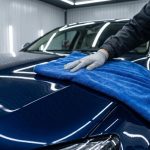
To prevent these problems from occurring, the first step should always be to apply TED Professional active foam, which gently loosens stubborn dirt and allows it to be safely rinsed away without mechanical contact. And after completing all washing procedures, the body must be dried immediately using a special automotive microfiber cloth with high absorbency or by blowing residual moisture out of crevices with a stream of purified compressed air.
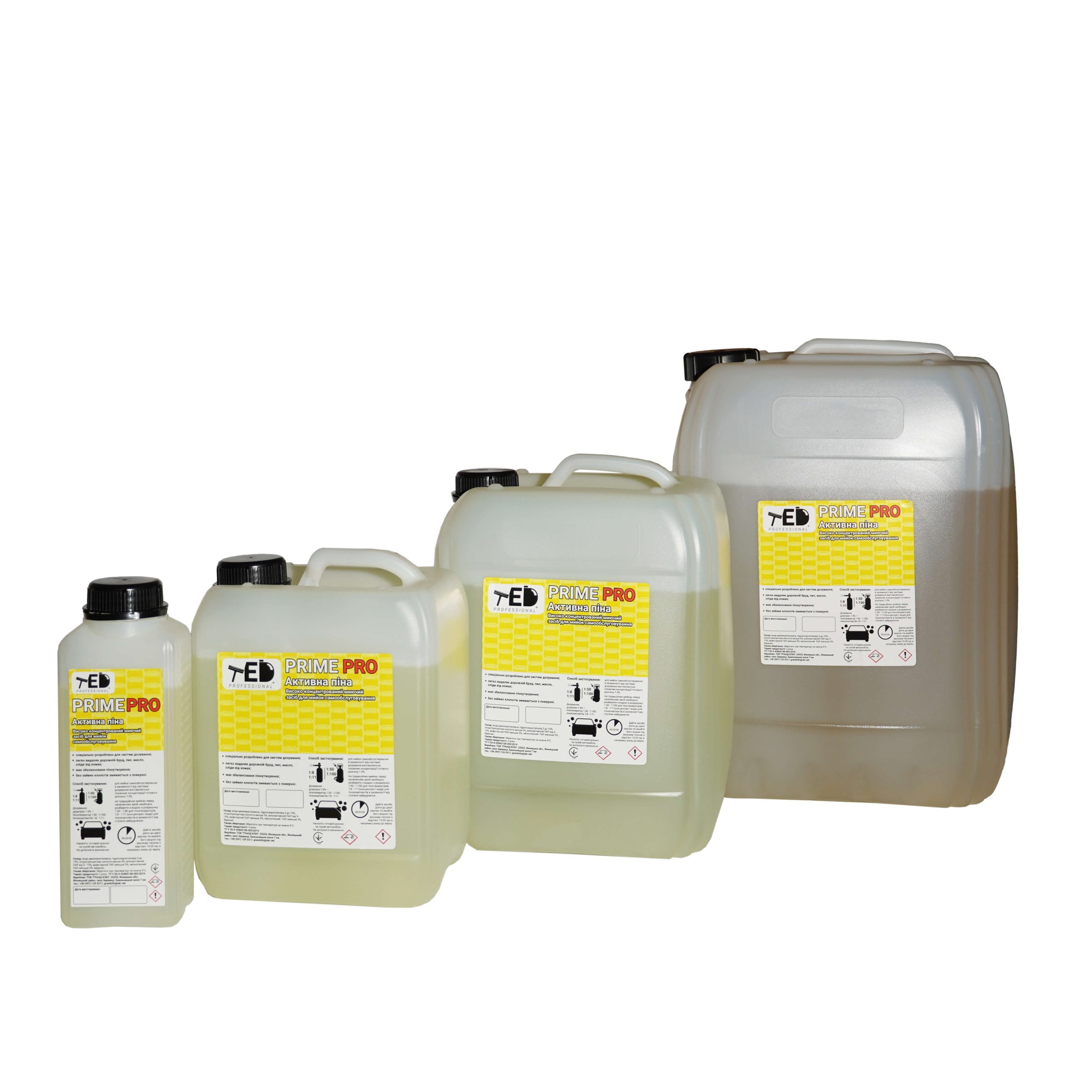
Prime Pro Active Foam – 1:50 – 1:100 (concentrate)
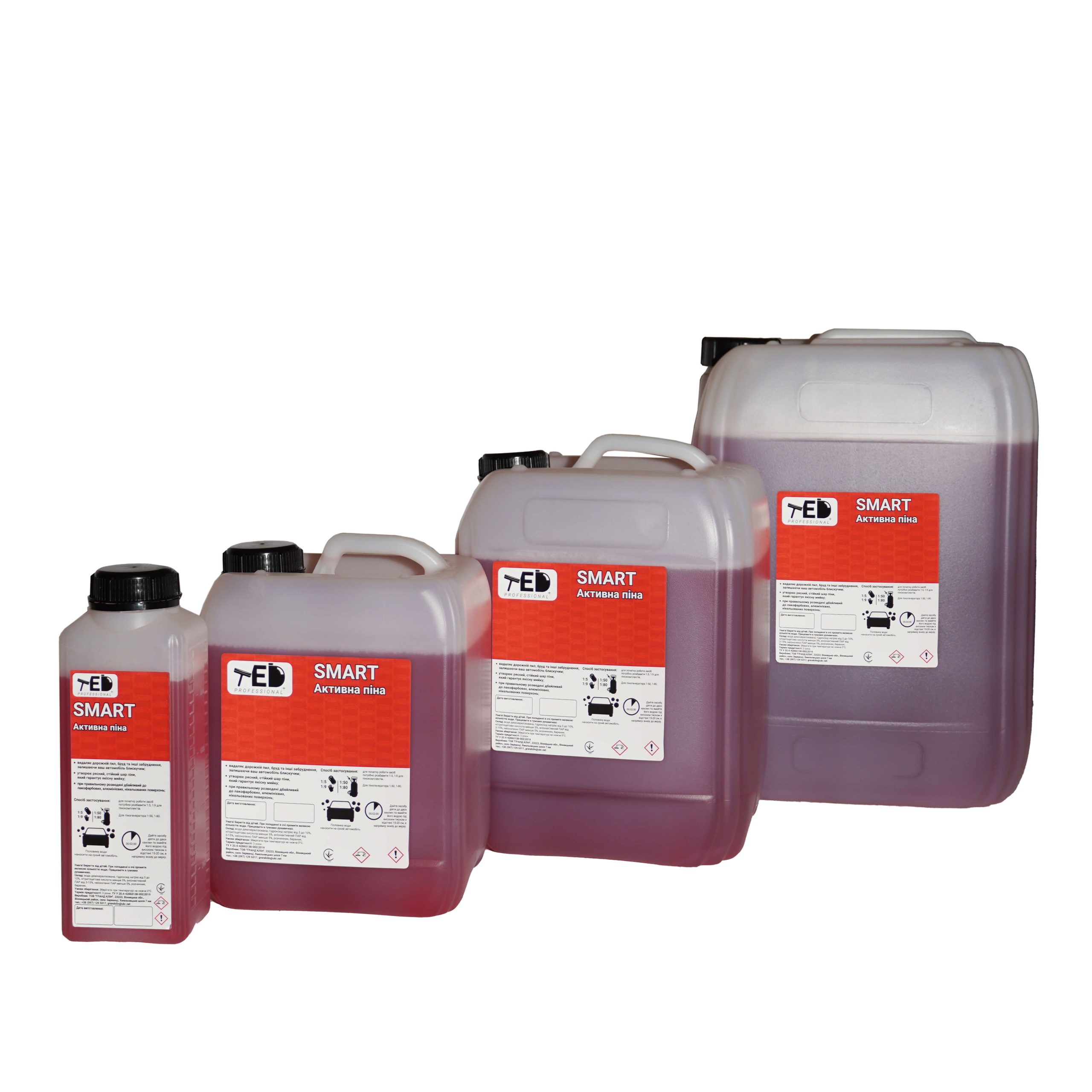
Price range: from 250 ₴ to 2,700 ₴Select options This product is available in several variations. You can select the options on the product page.Smart Active Foam – 1:50 – 1:80 (concentrate)
Price range: from 180 ₴ to 2,193 ₴Select options This product is available in several variations. You can select the options on the product page.Prime Active Foam – 1:50 – 1:80 (concentrate)
Price range: from 220 ₴ to 2,500 ₴Select options This product is available in several variations. You can select the options on the product page.
A Comparison of Different Ways to Dry a Car
| Method | Drying Quality | Risk of Stains |
|---|---|---|
| Natural drying | Low | Very high |
| Plain fabric | Average | Tall |
| Automotive Microfiber | High | Low |
| Filtered air flow | Very high | Minimum |
Water-repellent protection: How Liquid Wax prevents mineral stains from forming
In my practice, I always explain that it’s impossible to completely prevent a car from coming into contact with water, but it is possible to significantly reduce its interaction with the paint finish. This is precisely why modern protective wax and polymer formulations are used. They do not hide defects but alter the physical properties of the surface, allowing water to run off more quickly and significantly reducing the likelihood that mineral salts will remain on the body after drying.
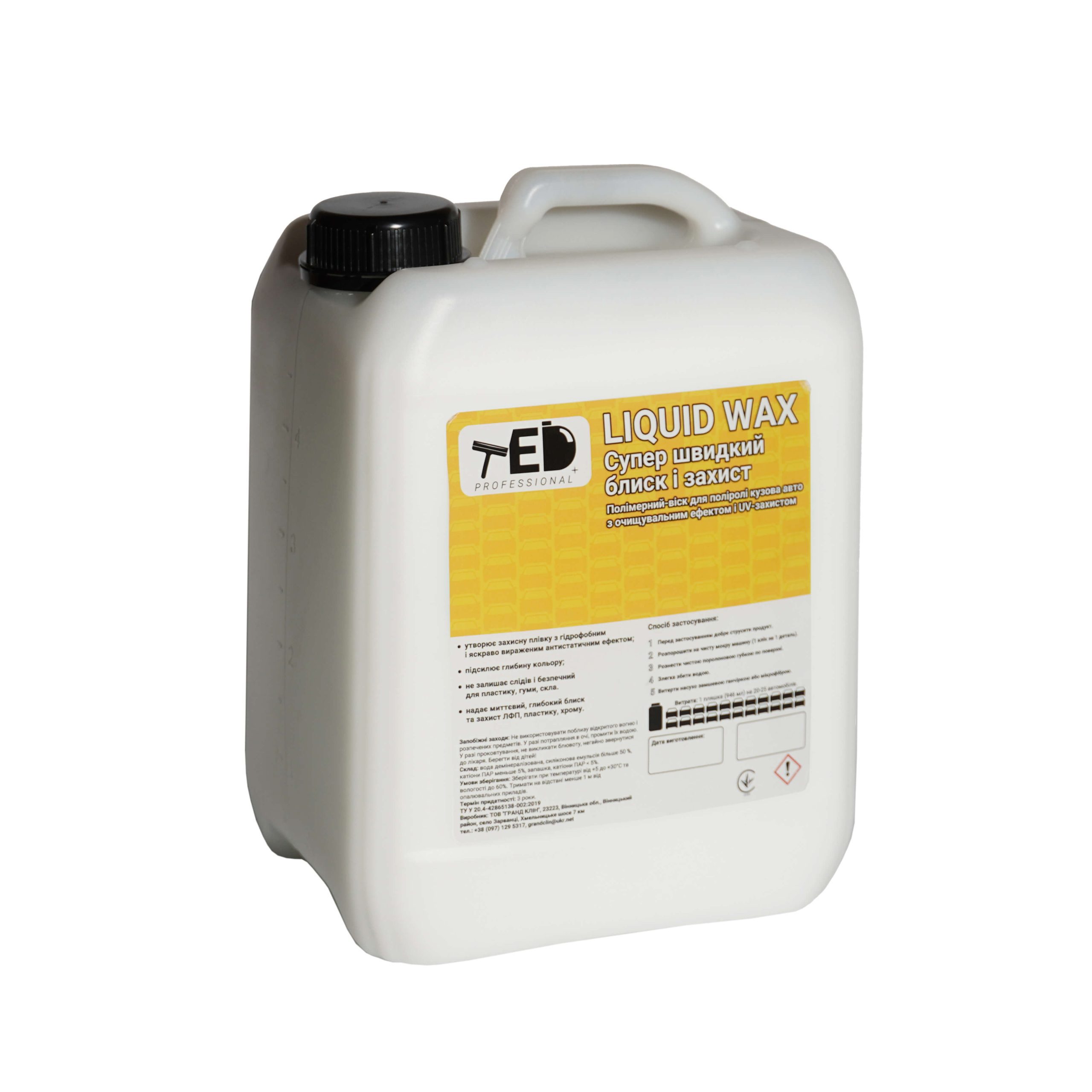
I recommend finishing every thorough wash by applying Liquid Wax. After application, a thin, even layer with low surface energy forms on the surface. The contact angle of water droplets increases; they form spherical droplets and easily roll off the body under their own weight, carrying dust and salt with them.
Any protective coating gradually wears away due to exposure to ultraviolet radiation, precipitation, and car washes. For cars used daily, I recommend regularly renewing the protective layer after a few washes. This helps maintain a consistent water-repellent effect, preserve a deep shine, and makes subsequent maintenance much easier.
Liquid Wax – Express Wax for a Wet Car Body, 3–5 min
Price range: from 650 ₴ to 1,800 ₴Select options This product is available in several variations. You can select the options on the product page.
What Happens After Applying a Protective Coating
| Unprotected | After applying Liquid Wax |
|---|---|
| The water spreads out evenly. | The drops roll off quickly. |
| Salts remain after evaporation. | Fewer mineral residues. |
| Dirt sticks more easily. | The surface stays clean longer. |
| The body tends to lose its luster more quickly. | The shine lasts longer. |
Signs that the protective coating needs to be renewed
- condensation or water no longer forms into large, round droplets;
- A painted car body stays wet much longer after rinsing;
- Lime stains occur much more frequently after the moisture has dried;
- Road dirt and dust stick to the surface much more quickly;
- The depth and intensity of the gloss in the lacquer finish appear to diminish.
Step-by-Step Guide to Washing a Car Without Spots or Streaks
Over the years, I’ve come to realize that a flawless result depends not so much on the cost of the car care products as on following the correct sequence for each step. Even professional products won’t deliver a mirror-like shine if you deviate from the proper washing technique or skip one of the important steps. It is precisely this comprehensive approach that minimizes the risk of mineral spots and keeps the paint finish in perfect condition.
Each step serves a specific purpose. Pre-washing removes abrasive particles, manual cleaning eliminates residual dirt, proper rinsing removes any remaining car care products, and thorough drying prevents water from drying naturally. The final application of protective wax creates a hydrophobic barrier that makes it easier to maintain the car in the future.
Step-by-step guide to proper washing
- Park the car in a shaded area or a cool room.
- Wait for the paint finish to cool down after your drive.
- Rinse off the bulk of the dust and sand with high-pressure water.
- Apply professional active foam to the entire car.
- Follow the recommended exposure time without allowing the product to dry.
- Rinse off all the lather thoroughly with clean water.
- Wash the car by hand using a high-quality car shampoo.
- Rinse the car body thoroughly, making sure no cleaning agents remain.
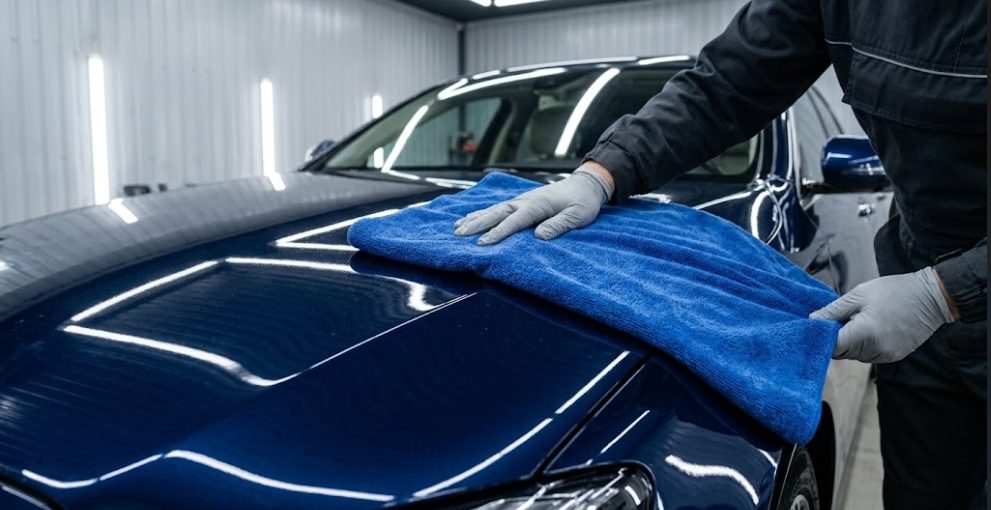
- Immediately dry the surface with an automotive microfiber cloth.
- Apply Liquid Wax for long-lasting protection.
How to Safely Remove Water Spots If They've Already Appeared
In my practice, I regularly encounter situations where a car owner notices spots only a few hours or even days after washing. If the mineral deposits haven’t yet had time to react with the paint finish, they can be removed without polishing. The most important rule is not to use harsh household acids or abrasive pastes unless absolutely necessary.
If stains remain after a recent wash, I recommend first rewashing the car using professional active foam, thoroughly rinsing away any remaining cleaning agents with demineralized or the softest possible water, and properly drying the body with a microfiber cloth. If the salt has already partially set in, detailing professionals use special products designed to remove mineral deposits (Water Spot Removers).
Not all light spots are caused by minerals. Sometimes, car owners mistake the early signs of paint oxidation or acid rain damage for water spots. In such cases, a professional assessment of the paint’s condition and gentle restorative polishing are required.
Step-by-Step Removal of Fresh Mineral Stains
- Let the body cool to ambient temperature.
- Wash the item first with active foam.
- Thoroughly rinse off all traces of automotive chemicals.
- If necessary, repeat the hand wash using car shampoo.
- Dry the surface with a clean microfiber cloth.
- Inspect the body under bright lighting.
- Apply Liquid Wax protective liquid wax.
How to Tell Water Spots Apart from Other Defects
| Characteristic | Water Spots | Damage to the paint finish |
|---|---|---|
| Form | Round or oval spots | Uneven matte areas |
| Reason | Mineral salts | Mechanical or chemical effects |
| Removal | Special Cleaning | Polishing or Restoration |
| Prevention | Proper Washing and Waxing | Comprehensive Care |
Common Myths About Stains Left After Washing a Car
Over the course of my career, I’ve heard dozens of explanations for why stains remain on a car after washing. Most often, car owners blame low-quality car care products or believe the problem is solely related to the body color. In fact, recent research in the field of automotive detailing confirms that water quality, proper washing techniques, timely drying, and the presence of a protective coating are crucial factors.
Another common myth is the belief that a stronger car wash detergent is always more effective. In reality, an excessive concentration of car wash detergent can make it difficult to rinse off completely, especially if the car is washed in hot weather. As a result, after the water evaporates, not only minerals but also residues of the detergent itself remain on the surface, forming noticeable streaks and dull spots.
Common Myths About Stains Appearing After Washing a Car
- Myth: Stains after washing are caused only by cheap car care products.
Fact: In most cases, the cause is hard water containing calcium and magnesium salts, as well as improper drying of the car after washing. Even professional car care products cannot prevent mineral deposits from forming if the water is allowed to dry naturally. - Myth: The more car shampoo you use, the cleaner the car’s body will be.
Fact: Excess shampoo or foaming agent is harder to rinse off completely. If residue from the cleaning product dries on the paint finish, it can cause streaks, smudges, and dull spots. - Myth: Water spots don’t form on light-colored cars.
Fact: Water spots can form on car bodies of any color. They’re simply less noticeable on light-colored paint, whereas they stand out much more on dark-colored cars. - Myth: Liquid wax is only needed to give the car’s body a beautiful shine.
Fact: Protective wax creates a water-repellent layer that helps water run off more quickly, reduces the formation of mineral spots (water spots), makes subsequent washes easier, and provides additional protection for the paint finish against contaminants. - Myth: If a car dries naturally, it won’t affect the condition of the body.
Fact: It is precisely during natural drying that water droplets evaporate, leaving behind hardness salts, minerals, and other impurities on the surface. This is why spots, streaks, and limescale often appear after washing. - Myth: Any kind of water is equally suitable for washing a car.
Fact: For the final rinse, it’s best to use demineralized or reverse-osmosis water. It contains virtually no hardness minerals and significantly reduces the risk of white streaks after drying. - Myth: If streaks remain after washing, it’s enough to simply rinse the car again with water.
Fact: If the cause is hard water or residue from car care products, rinsing again with the same water won’t solve the problem. You need to dry the body properly or use clean, demineralized water. - Myth: High-quality microfiber doesn’t affect the final drying result.
Fact: Low-quality cloths can leave lint behind, absorb water poorly, and even cause fine scratches. Professional automotive microfiber effectively removes residual moisture without leaving streaks and helps maintain the paint’s flawless appearance.
Summary and Checklist for Proper Washing from TED Professional
Based on my own practical experience, I can confidently say that the appearance of spots after washing a car is almost always the result of not following proper care procedures, rather than a flaw in modern car care products. It is the sequence in which each step is performed that determines the final result. Using professional products in combination with the correct washing technique helps preserve the factory shine of the paint finish and significantly extend its service life.
Recent research in the field of colloid chemistry confirms that hydrophobic polymer and wax coatings reduce the contact area between water droplets and the painted surface, accelerate the rolling off of droplets, and significantly reduce the amount of mineral residue left behind after drying. That is why liquid wax is not merely an aesthetic element, but an important component of a car’s protective treatment.
Checklist for Washing Your Car Properly
- Always work only on a completely cooled-down body.
- Avoid washing your car in direct sunlight.
- Pre-clean the car with professional active foam.
- Follow the manufacturer's recommended concentration for automotive chemicals.
- Rinse off all traces of cleaning products completely and thoroughly.
- Do not let water droplets dry naturally on the car body.
- Dry the car immediately with a clean, high-quality microfiber cloth.
- Apply Liquid Wax regularly to create a water-repellent protective layer.
- Reapply the protective coating after every few washes.
As a TED Professional expert, I am convinced that a perfectly clean car body, free of spots and streaks, is the result of a properly structured care regimen. To achieve consistent, professional results, I recommend using TED Professional’s proven system of solutions, designed for safe cleaning and long-lasting protection of your car.
Liquid Wax – Express Wax for a Wet Car Body, 3–5 min
Price range: from 650 ₴ to 1,800 ₴Select options This product is available in several variations. You can select the options on the product page.
Frequently Asked Questions
Why do stains remain on the car's body after washing it?
Most often, stains are caused by hard water droplets—which contain calcium, magnesium, and other mineral impurities—drying on the surface. After the water evaporates, these substances remain on the paint finish as light-colored or whitish deposits. If the car is allowed to dry naturally in the sun or isn’t wiped down promptly, the number of such marks increases significantly. Regular use of demineralized water for the final rinse and thorough drying with a microfiber cloth help eliminate the problem almost entirely.
Can active foam cause streaks?
Professional active foam does not leave streaks on its own if used according to the manufacturer’s recommendations. Problems arise when the product is diluted incorrectly, applied to a hot car body, allowed to dry, or not rinsed off thoroughly enough. High-quality car care products contain ingredients that are easily removed with water and do not damage the paint finish. Following the correct washing technique is just as important as choosing the right product.
Why shouldn't you wash your car in the sun?
When exposed to direct sunlight, the car’s body heats up quickly, and the water and car care products evaporate before the washing process is complete. As a result, mineral salts, shampoo residue, or active foam do not have time to be completely rinsed off and dry directly on the paint finish. This leads to the appearance of spots, dull marks, and streaks, which sometimes have to be removed by washing the car again or using special products.
What's the right way to dry a car after washing it?
The best way is to remove any remaining water immediately after rinsing using a high-quality, highly absorbent automotive microfiber cloth or a stream of compressed air. Pay special attention to the mirrors, joints between body panels, door openings, the radiator grille, and other areas where water tends to accumulate. The faster the moisture is removed, the less likely mineral spots and streaks are to form.
Does liquid wax help prevent water spots?
Yes. After applying liquid wax to the car’s body, a thin, water-repellent protective layer forms on the surface, which reduces water contact with the paint finish. Water droplets roll off the surface more quickly, carrying away some of the dirt with them, so the risk of mineral deposits forming is significantly reduced. In addition, the wax enhances the shine, makes subsequent washes easier, and helps keep the car looking well-maintained for longer.
What kind of water is best for the final rinse?
For the final rinse, it is best to use demineralized, osmotic, or deionized water. It contains virtually no calcium, magnesium, or other hardness salts, which leave characteristic light spots after drying. That is why most modern professional car washes use reverse osmosis systems for the final stage of car washing.
Why do you sometimes see rainbow-colored or greasy streaks after washing?
Rainbow-colored or greasy streaks can appear due to an excess of car shampoo, active foam that wasn’t rinsed off properly, residues of wax products, or oily road grime that wasn’t completely removed during washing. Sometimes the cause is the use of low-quality microfiber cloths, which leave their own fibers and cleaning product residues on the surface. To eliminate these defects, you must wash the car again using the proper technique.
How can you prevent spots and streaks from forming after every wash?
To keep the car’s body clean and free of spots and streaks, it is recommended to use professional car care products, wash the car only on a cool surface and in a shaded area, thoroughly rinse off all cleaning products, use demineralized water for the final rinse, dry the body with a high-quality microfiber cloth, and regularly apply a protective liquid wax. Comprehensive care significantly simplifies future washes and helps maintain the paint’s flawless shine for longer.