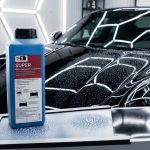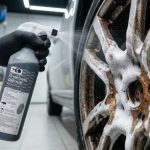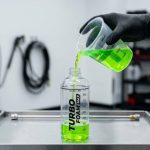
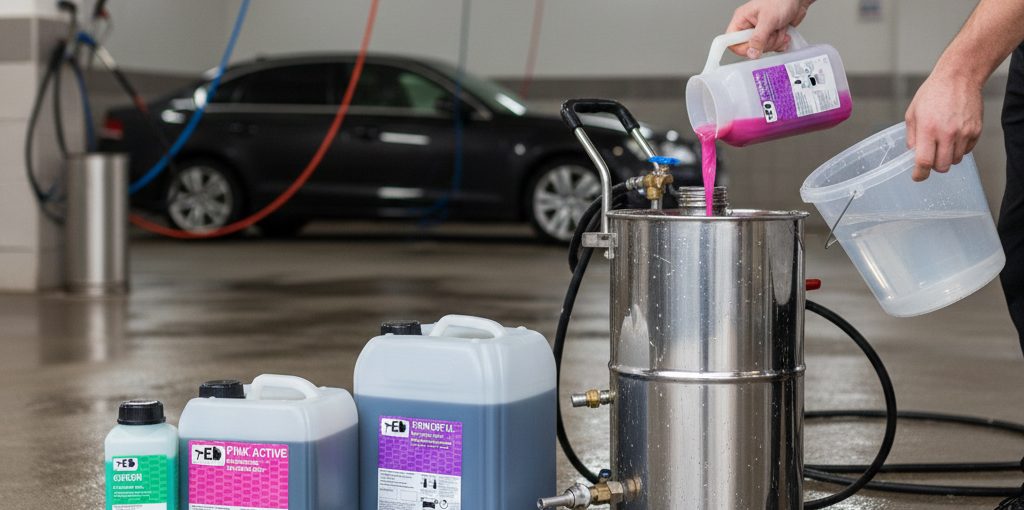
Active foam is a key component of contactless car washing. It is the active foam used in car washes that determines cleaning effectiveness, the safety of the paint finish, chemical consumption, and customer satisfaction at the car wash.
In practice, most problems—such as “the foam doesn’t last,” “it doesn’t remove dirt well,” and “it leaves stains”—are not related to the quality of the product, but to errors in the dilution ratio.
In this article, we will take a detailed look at:
- how active foam works from a chemical standpoint;
- why concentration is critical;
- how to properly mix foam for car washes and home use;
- What factors influence the outcome?;
- Common mistakes and how to avoid them.
This material was prepared based on the practices of professional car washes and current scientific research in the field of surfactants.
Why Proper Dilution of Active Foam Is Critical
The Effect of Concentration on Cleaning Efficiency
- stable, dense foam;
- even coverage of the surface;
- Safe for use with paint, plastic, and rubber.
Consequences of excessive concentration
- aggression toward LKP is increasing;
- The varnish may become cloudy with frequent use;
- The consumption of concentrate increases significantly without any real benefit.
The Consequences of Poor Dilution
- rapid foam runoff;
- poor dissolution of the road film;
- the need to wash it again.
The reasons why foam doesn't stick well to a car are discussed in detail in a separate article— Why Foam Doesn't Stick Well to a Car.
Factors Affecting the Proper Dilution of Active Foam
Water Hardness
Calcium and magnesium salts in hard water reduce the effectiveness of surfactants, so even a high-quality concentrate may produce poor results. Under such conditions, it is important to either adjust the proportions or use foaming agents with an enhanced formula.
Water Temperature and Seasonality
During the cold season, active foam behaves differently. Lower temperatures slow down chemical reactions, which can cause the foam to lose its density more quickly. A detailed explanation of this process from a chemical perspective is provided in the article“Why Active Foam Behaves Differently in Winter.”
Equipment Type
- foam generators;
- foam kits;
- self-service car washes.
How to Prepare Active Foam for Home Use
Home-use mini-washers and foamers operate at lower pressure, so the mixing ratios are usually slightly different from those used in professional equipment. It is important not to exceed the recommended concentration to avoid damaging the paint finish. Typical mixing ratios: 1:5 – 1:10 in a foamer.
Common Mistakes When Preparing Active Foam
- failure to follow instructions;
- diluting "by eye";
- use of hard or cold water;
- Improper storage of the concentrate.
One of the most common problems is when the foam quickly slides off the car's body. The main causes of this phenomenon and practical solutions are described in detail in the article "Why Foam Doesn't Stick Well to Cars."
How to check if the foam is mixed correctly
- The foam evenly covers the car;
- does not slide off for 2–4 minutes;
- After rinsing, the surface is clean and free of residue.
Insights from TED Professional Experts
Properly diluting active foam requires a combination of chemical knowledge, practical experience, and adherence to the manufacturer’s recommendations. It is this approach that allows you to achieve consistent results, reduce chemical consumption, and ensure the vehicle’s safety.
You can explore the full range of professional solutions in theTED Professional Active Foam section.
Frequently Asked Questions
How do you properly mix active foam for a car wash?
For professional car washes, active foam is typically diluted in a foam tank at a ratio of 1:50–1:100 or 1:10–1:20, depending on the type of product and equipment.
Is it possible to increase the concentration of active foam in the winter?
Yes, a slight increase in concentration is permitted, but only within the manufacturer's recommendations.
Why does the active foam quickly run off the car?
The main causes are incorrect dilution, hard water, or low temperature.
Does concentrated active foam damage the paint?
If used regularly, excessively concentrated foam can damage the paint finish.