
As an automotive chemicals technologist, I regularly encounter one very common mistake. Using the same cleaning formulations regardless of the season leads to poor results. At first glance, it seems that active foam should perform just as consistently. But from the perspective of physical and chemical processes, the conditions are completely different and complex. Temperature, the nature of the contaminants, and water hardness directly affect the washing process. All of these factors change dynamically throughout the year and determine overall effectiveness.
That is precisely why a professional approach to car wash operations requires mandatory seasonal adjustments. Otherwise, you’ll either end up overspending or with very inconsistent results. In this article, I’ll explain in detail why this happens from a chemical perspective. We’ll break down how to properly select professional cleaning products for each specific season of the year. You’ll learn how to maintain service quality regardless of the vagaries of the ever-changing weather. Choosing the right products is the key to your business’s success in today’s environment.
Comment from the process engineer
In my practice, I have repeatedly observed situations where foam performs differently. The reason lies not in the quality of the product but in changes in environmental conditions. That is why professional lines of automotive chemicals are developed with many seasonal factors in mind. Temperature, the type of contaminants, and water parameters determine the final formula of each product. Ignoring this important principle is the main reason for the inconsistent performance of modern car washes. Only a deep understanding of chemical processes allows for achieving the benchmark result in surface cleaning.
How a car's dirt and grime change over the course of a year
Contaminants on a car’s body have different chemical compositions depending on the season. In winter, these are primarily aggressive salts, road de-icing agents, and fuel combustion byproducts. These substances have a very complex structure and actively interact with the protective clear coat. They form strong adhesive bonds that are difficult to break with ordinary household cleaning products. Therefore, the winter season requires special attention when selecting powerful and safe cleaning concentrates. Only specialized active foam is capable of effectively removing such a dangerous layer of winter grime.
In the spring, roads are dominated by dust, mineral particles, and organic plant debris. In the summer, bitumen, natural resins, and grease are added to this list. In the fall, we see increased humidity and humus, along with a highly acidic environment. That is why there is no universal formula that works equally well all year round. Each type of dirt requires a specific approach to selecting the active ingredients in the cleaning formula. Using tailored solutions allows you to keep your car perfectly clean during any seasonal transition.
The Effect of Temperature on the Performance of Automotive Chemicals
Temperature is one of the key factors determining the effectiveness of all cleaning products. At low temperatures, the chemical activity of important surfactants in the formulation decreases significantly. They form active micelles much more slowly and interact less effectively with road grime. This makes it necessary to increase the concentration of the working solution to achieve the desired result. Winter cleaning products must contain special additives to ensure stable performance in freezing conditions. Without these components, the cleaning process becomes ineffective and takes much longer.
In the summer, the situation is the opposite because high temperatures significantly accelerate all chemical reactions. At the same time, this reduces contact time due to the very rapid evaporation of water from the surface. This often results in the foam not having enough time to complete its cycle. That is why I always recommend carefully adjusting the formulation and concentration to suit the current season. Using the right application strategy prevents the cleaning solution from drying out on the hot car body. The correct temperature conditions are the foundation for safe and high-quality touchless car washing.
Why Do Winter and Summer Car Care Products Differ?
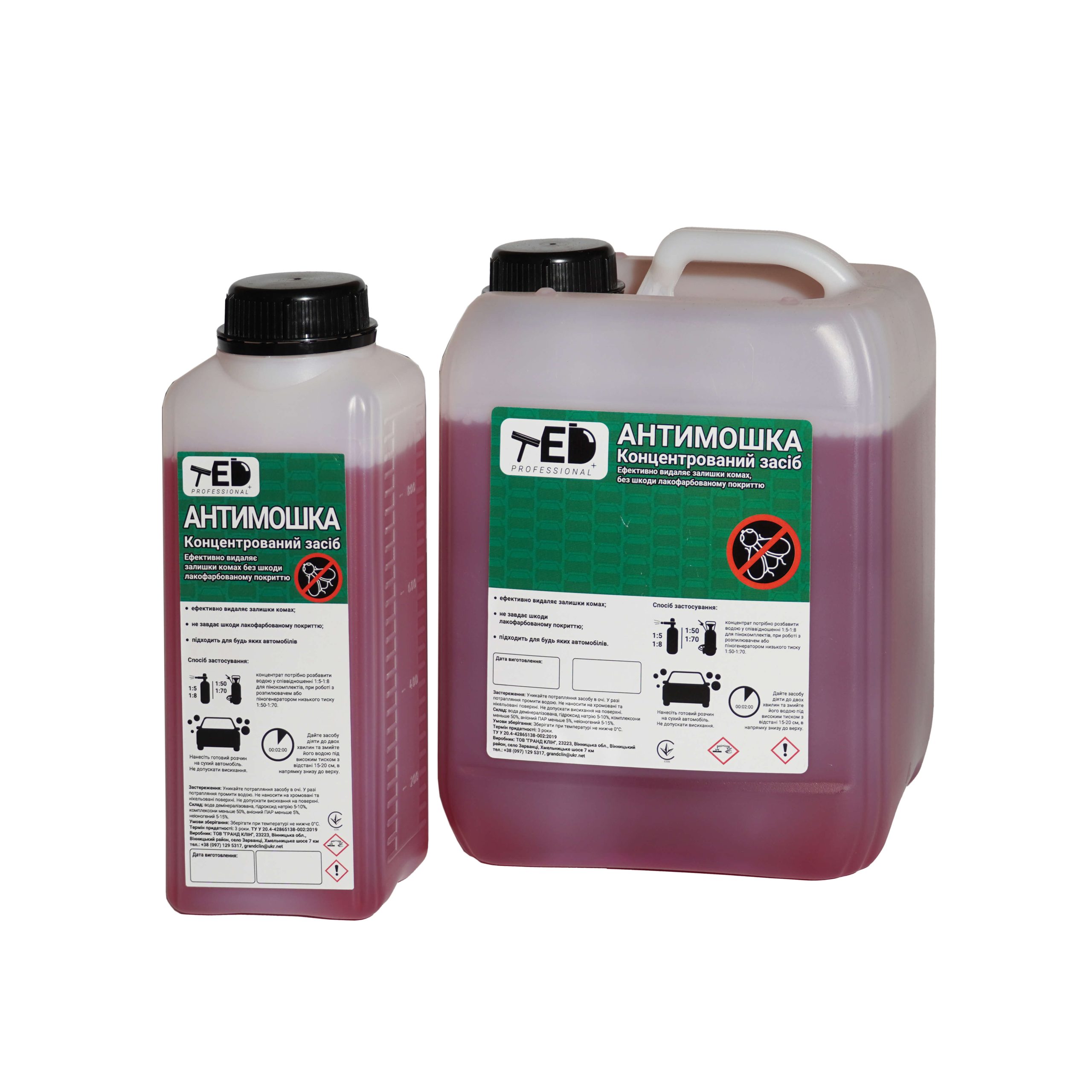
Winter formulations have higher alkalinity and contain components that are effective at low temperatures. They also contain special additives that prevent the solution from crystallizing in complex systems. This ensures uninterrupted equipment operation even during severe winter frosts outdoors. Summer products, on the other hand, are designed primarily to combat heavy organic contaminants. For example, to remove insects, I recommend using special insect-removal products. This approach ensures the rapid dissolution of biological residues without damaging the car’s paint finish.
Antimoshka – a cleaner for insects and organic contaminants
Price range: from 250 ₴ to 1,350 ₴Select options This product is available in several variations. You can select the options on the product page.
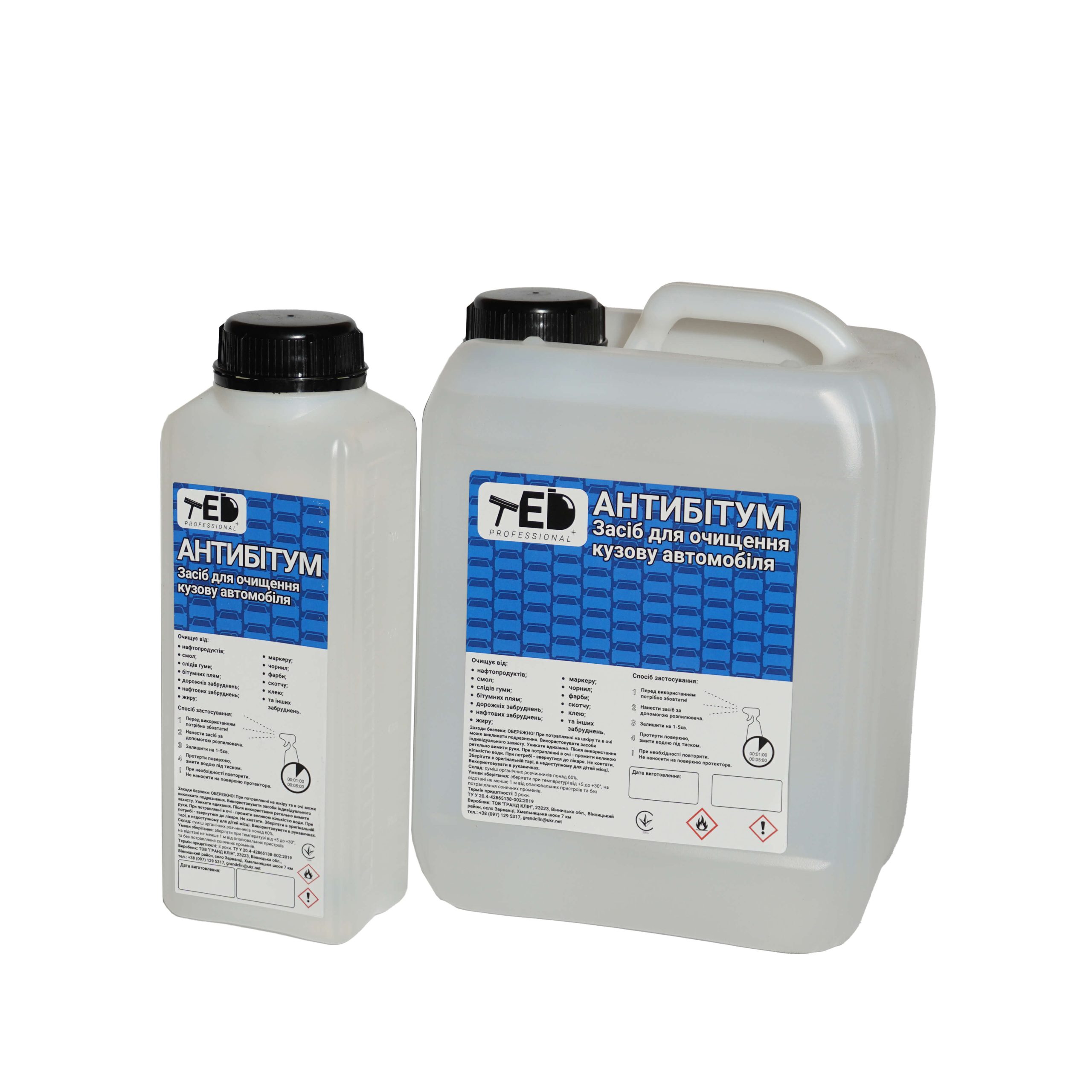
A professional, high-performance product is ideal for effectively removing resin and petroleum product droplets bitumen remover.
Antibitum – a bitumen and resin cleaner
Price range: from 451 ₴ to 1,994 ₴Select options This product is available in several variations. You can select the options on the product page.
The Role of Water Hardness in Different Seasons
Water hardness fluctuates constantly depending on the season and affects the performance of cleaning products. High levels of calcium and magnesium salts significantly reduce the cleaning effectiveness of surfactants. That is why TED’s professional formulations contain powerful chelating agents that reliably bind ions. This ensures consistent cleaning performance even under the most challenging operating conditions. Without such additives, the foam quickly loses its structure and becomes ineffective against static electricity. Monitoring water parameters is critical to maintaining consistently high-quality cleaning services.
Practical Recommendations from a Technologist
In my work, I follow a simple principle: I select cleaning products based on environmental conditions. In winter, we use more aggressive formulas with a powerful anti-salt effect to protect the car’s body. In the summer, it’s best to use mild yet highly effective cleaning agents that tackle organic matter and grease. It’s also extremely important never to skip the mandatory second phase of a professional car wash. For this, you must always use special shampoos designed for hand washing cars. Only this method allows you to completely and safely remove stubborn, static dirt buildup.
Expert's Conclusions
Adjusting car care products according to the season is a fundamental principle of proper professional car care. Ignoring this factor inevitably leads to a loss of effectiveness and significant financial overspending. As a technician, I always emphasize that the right car care products are not a single, one-size-fits-all solution. It’s always a tailored solution that takes into account all the specific characteristics of the environment and the types of contaminants. It is precisely this professional approach that allows you to achieve consistent quality and preserve the paint finish. Choose proven solutions for your business to guarantee your customers the best service every day.
Frequently Asked Questions
Why can't you use summer active foam in the winter?
Summer formulations are designed to remove organic matter (insects, dust), while winter formulations are designed to combat salts and chemicals. In winter, summer foam is much less effective due to low temperatures and the different chemical composition of the contaminants.
How does the ambient temperature affect the performance of automotive chemicals?
At low temperatures, chemical reactions slow down, and surfactants become less active. In the summer, however, the opposite is true—high temperatures accelerate the reactions but cause the foam to dry out more quickly, which requires adjusting the concentration and dwell time.
Should the dilution ratio of the concentrate be adjusted depending on the season?
For example, in winter it is recommended to use a stronger solution (higher concentration) due to the persistence of salt deposits, while in summer, the dilution should be adjusted to prevent the product from drying out on the hot truck bed.
What special products should you add to your regular summer hair care routine?
During the summer, be sure to use specialized cleaners—Antimoshka to remove insect residue and Antibitum to safely dissolve road tar droplets that cannot be removed with regular foam.
Do seasonal changes in chemistry affect the durability of paint and varnish coatings?
Adjusting the chemical composition for the season actually protects the paint. Using the right formula helps avoid excessive mechanical friction from sponges and the harsh effects of incompatible alkalis, which preserves the integrity and shine of the car’s paint.