
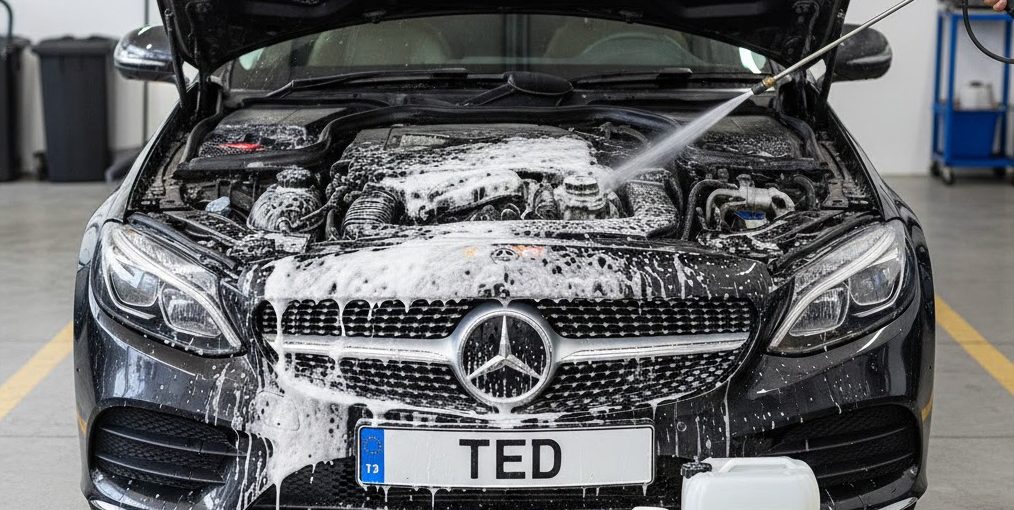
Cleaning the engine is an important part of car maintenance, as a clean engine compartment affects heat dissipation, the stable operation of electronic components, and the durability of materials. Oil deposits, dust, and road chemicals form a heat-insulating layer that accelerates component wear, so the proper use of an engine cleaner is not only aesthetically important but also practical.
At the same time, the risk of a short circuit is usually associated not with water, but with improper washing techniques and the use of aggressive cleaning agents, making adherence to the correct procedure a key safety factor.
How Engine Cleaning Works
Contaminants in the engine compartment consist mainly of a mixture of mineral and synthetic oils, oxidation products, metal microparticles, and road dirt. These substances adhere strongly to metal and polymer surfaces because they form hydrophobic films that are virtually impossible to wash off with water. That is why using a regular car wash detergent or body wash is ineffective and potentially dangerous.
This professional engine cleaner works on the principle of emulsification, in which surfactants reduce the interfacial tension between grease and water. Organic solvents penetrate the structure of grease deposits, break down their internal bonds, and transform the contaminants into a state that can be easily rinsed away without mechanical friction. It is precisely this lack of physical contact with the surface that is a key safety factor for wiring and electronic components.
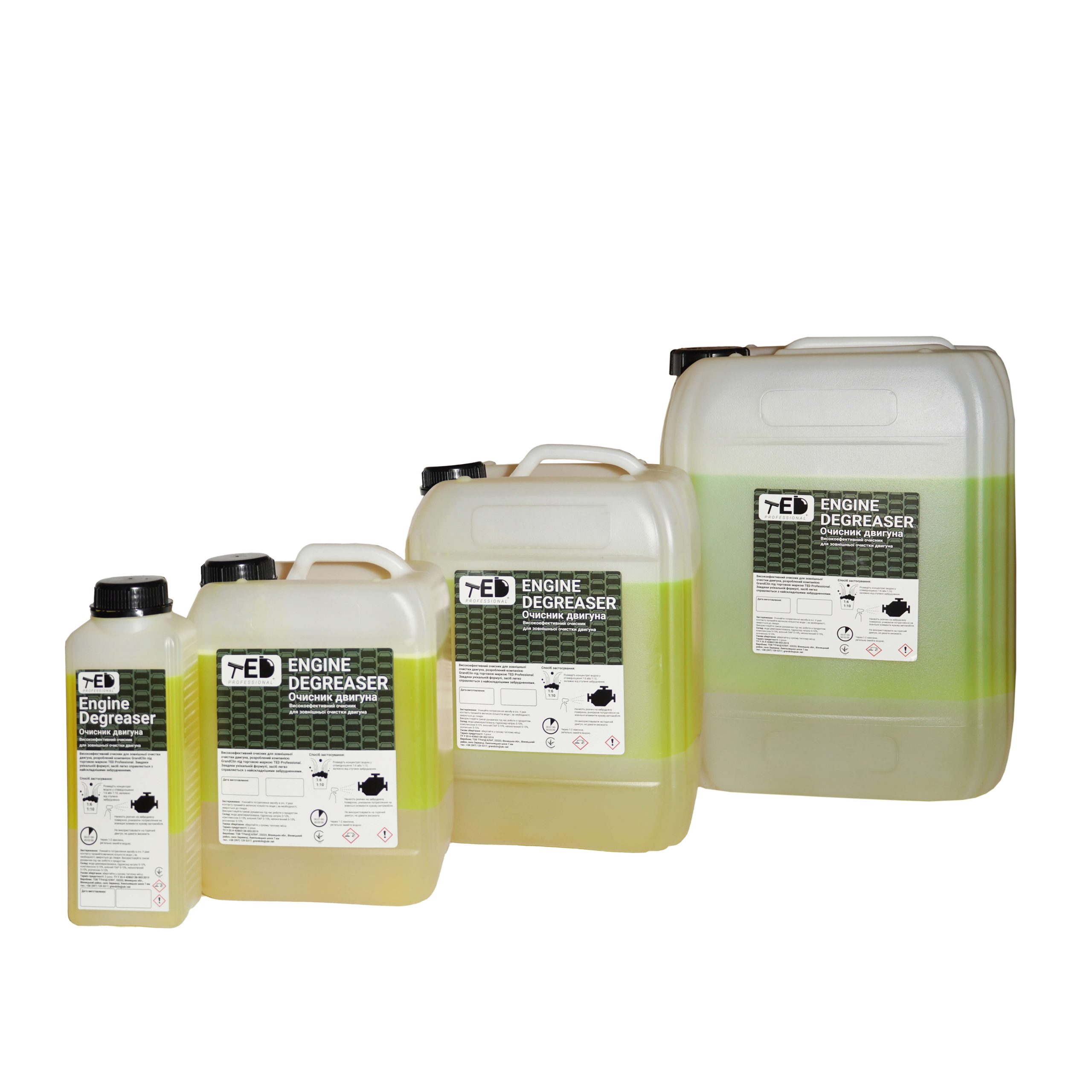
Expert Tip: To achieve the best results without damaging parts, experts recommend using proven formulas. TED Professional’s engine cleaner is specifically designed to safely remove stubborn oil stains without damaging rubber hoses or plastic covers.
ENGINE DEGREASER – Engine Degreaser – 1:10 (concentrate)
Price range: from 235.00 ₴ to 2,690.00 ₴Select options This product is available in several variations. You can select the options on the product page.
Studies published in the *Journal of Automotive Engineering* confirm that the controlled use of mildly alkaline and neutral cleaners does not cause degradation of wire insulation and does not affect the integrity of electrical connections. The critical factors are exposure time and surface temperature, not the mere fact of contact with moisture.
Why is there a risk of a short circuit if the appliance is washed incorrectly?
The main cause of problems after washing the engine lies in a failure to follow the proper procedure, not in the procedure itself. Water under pressure entering unprotected connectors can cause a temporary short circuit, especially if the contacts already show signs of corrosion or oxidation. However, in a vehicle in good working order, most electrical connections have a basic level of moisture protection designed for operation in rainy conditions.
An additional risk arises from the use of harsh alkaline or acidic cleaners, which damage the protective coatings on electrical contacts. For this reason, products intended for cleaning wheels or the vehicle body —even if they are classified as automotive chemicals —must not be used in the engine compartment unless specifically designed for that purpose. An improperly selected cleaner can reduce the electrical insulation properties of materials and create conditions conducive to leakage currents.
Preparing the Engine Before Washing: A Key Safety Step
Before using any engine cleaner, it is essential to properly prepare the engine compartment, as this step determines the final result. First and foremost, the engine must be completely cool to avoid thermal deformation and violent chemical reactions. The surface temperature should not exceed the ambient temperature by more than a few degrees.
The next step is to visually inspect the condition of the electrical wiring and connectors. If there is visible damage to the insulation or exposed contacts, they must be temporarily protected from direct contact with water. In professional practice, special protective materials are used for this purpose, which leave no residue after removal.
A safe engine cleaning technology that poses no risk to the electronics
The cleaner should always be applied locally, taking into account the degree of soiling in specific areas. The product should be sprayed in an even layer without using too much, as an excessive amount does not increase effectiveness but only makes it harder to control the process. After application, allow the time recommended by the manufacturer to elapse so that the active ingredients have time to act on the soiling.
Rinsing is performed using water at minimal pressure, directed at an angle rather than directly at the electronic components. This method effectively removes dissolved deposits without causing water hammer on the contacts.
Is protection needed after cleaning the engine?
After using an engine cleaner, the surfaces in the engine compartment become clean but, at the same time, more susceptible to re-soiling. That is why professional car care recommends using protective products from the car care category, which reduce the adhesion of dust and moisture.
Expert's Conclusions
Safe engine cleaning is a controlled technical process based on selecting the right product and following the correct sequence of steps. Using a high-quality engine cleaner ensures a clean engine compartment without any negative consequences and helps maintain the stable operation of the vehicle’s electronic systems.
Is it safe to wash the engine of a modern car with a lot of electronics?
Yes, provided that a special engine cleaner is used and the proper cleaning procedure is followed, there is no risk to the electronics.
Can an engine cleaner cause a short circuit?
The cleaner itself will not cause a short circuit if it is designed for the engine compartment and is used according to the instructions.
Is it okay to wash the engine with pressurized water?
It is permissible to rinse with water at low pressure and at an angle, taking care to avoid direct contact with electrical connectors.
When is the best time to wash the engine—when it's hot or when it's cold?
The engine should always be washed when it is completely cool to avoid the risk of damaging materials and electronics.
Is protection necessary after cleaning the engine?
Yes, after washing, it is recommended to use protective products for plastic and rubber to reduce re-soiling.
ENGINE DEGREASER – Engine Degreaser – 1:10 (concentrate)
Price range: from 235.00 ₴ to 2,690.00 ₴Select options This product is available in several variations. You can select the options on the product page.