I regularly encounter situations where fabric surfaces in a car’s interior or around the house look worn out much sooner than they should. The reason is almost always the same—improper cleaning. The structure of fabric fibers allows dust, grease particles, and organic residues to penetrate deeply, eventually forming stubborn, complex stains.
Unlike smooth surfaces, fabric traps not only visible dirt but also microparticles that compromise hygiene and the surface’s appearance. That’s why I don’t recommend limiting yourself to just wiping the surface or using all-purpose cleaners. The TED Professional fabric cleaner works differently—it acts in a controlled manner without damaging the fiber structure.
What fabrics are used, and why is this important?
Types of Fabrics by Fiber Composition
In car interiors and home textiles, I most often come across natural, synthetic, and blended fabrics. Cotton and wool are highly hygroscopic, which means they actively absorb moisture and dirt. Synthetic fibers, such as polyester or nylon, absorb less water but quickly accumulate grease.
Blended fabrics combine the properties of both types of fibers, and they’re the ones that cause the most problems. The same product can work differently depending on the fabric’s composition, so there’s no one-size-fits-all solution. That’s why I always recommend using specialized products rather than household cleaning products.
Tissue structure and its role in pollution
In addition to the fiber composition, the weave density plays an important role. The denser the fabric, the deeper the dirt is trapped inside. The capillary effect draws the cleaning solution, along with the dirt, deeper into the fabric, and if rinsed improperly, streaks and secondary stains may appear.
Studies published in the *Textile Research Journal* confirm that most stubborn stains form not on the surface, but inside the fibers. Therefore, I believe that mechanical friction without the proper chemicals is ineffective and even harmful.
What types of stains does the fabric cleaner remove?
In my practice, I have observed that fabric surfaces accumulate both organic and inorganic contaminants. Organic contaminants include sweat, skin oils, and food and beverage residues, which polymerize over time and become less soluble in water.
Inorganic contaminants—dust, soot, and mineral particles—act as abrasives and trap organic matter inside the fibers. That is why simply washing with water or soap does not work. A professional fabric cleaner is designed to tackle complex stains, transforming them into a form that can be safely removed.
An Innovative Solution: TED Professional's Fabric Cover Cleaner
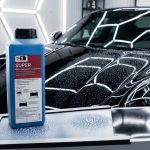
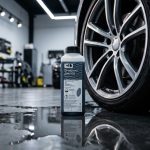
Fabric Upholstery Cleaner – for car interiors and Alcantara – 1:10 (concentrate)
Price range: from 375 ₴ to 3,390 ₴Select options This product is available in several variations. You can select the options on the product page.
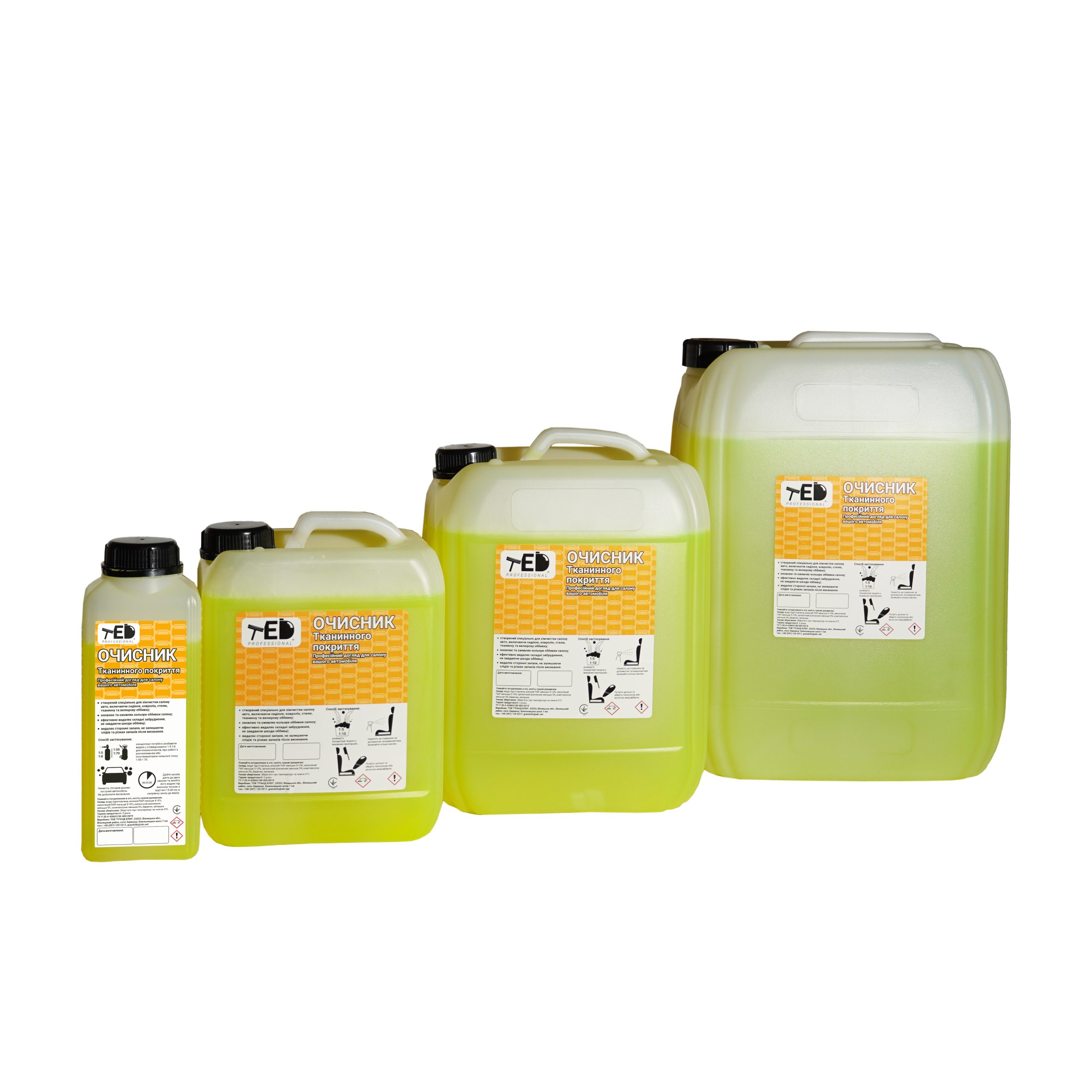
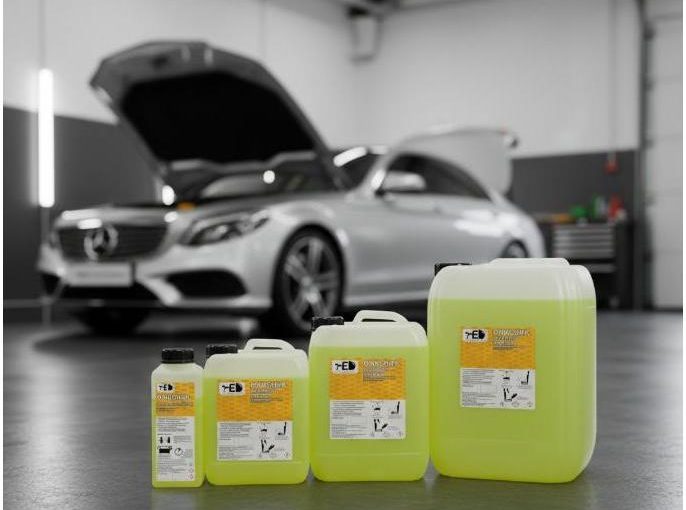
To achieve optimal results, we recommend using our specialized TED Professional fabric cleaner, which has undergone numerous internal laboratory compatibility tests. Our team developed this concentrate to provide professional-level care for textiles, Alcantara, and velour without risking damage to the structure of delicate fibers. As the manufacturer, we guarantee highly effective removal of stubborn stains and the complete absence of any chemical odors once the surfaces have fully dried. We are confident that diluting our product economically at a ratio of one to ten will allow you to save significantly while still achieving uncompromising cleaning quality. By choosing TED Professional products, you get a proven solution that restores your car upholstery or home furniture to its original appearance and pleasant freshness.
The product’s high cost-effectiveness stems from the ability to dilute the concentrate at a ratio of one to ten, which turns one liter of the product into eleven liters of ready-to-use solution. This professional-grade formula effectively revitalizes velour, carpet, and even delicate Alcantara, eliminating odors and providing powerful disinfection of the treated areas of the interior. When using this product, safety precautions must be followed, including wearing rubber gloves and storing the container at a temperature of at least five degrees Celsius. The product works perfectly with extractor vacuums, allowing you to achieve professional-grade dry-cleaning results in a single pass, without leaving any harsh chemical odors after drying. Its pleasant, fresh scent and phosphate-free formula make this product the best choice for regular care of your car’s seats, headliner, and floor mats.
Economic Rationale: Why Concentrates Are More Cost-Effective Than Ready-Made Solutions
Using professional concentrates in car care allows you to significantly optimize costs without compromising cleaning quality. According to internal calculations by the TED Professional laboratory, the cost of one liter of ready-to-use solution made from our concentrate is significantly lower than the market price of household sprays. This allows large fleets and private owners to enjoy premium-quality chemical cleaning at minimal cost, while maintaining a high concentration of active ingredients in each batch. Below is a comparison of maintenance costs based on average market prices as of 2026.
| Comparison metric | Ready-to-use household spray (0.5 L) | TED Professional (1 L) | Cost Savings and Benefits |
|---|---|---|---|
| Volume of the finished product | 0.5 liters | 11 liters (1:10) | 22 times more product |
| Average price per unit | starting at 250 UAH | starting at 300 UAH | Minimum price difference |
| Cost of 1 liter of solution | ~500 UAH | ~27.27 UAH | Savings of over 1,800% |
| Purpose | Surface cleaning | Deep Dry Cleaning | Professional pH Level |
| Impact on the Environment | 22 plastic bottles | 1 canister | Less plastic waste |
By using the TED Professional fabric cleaner, you not only save money but also gain confidence that your car’s materials are safe. The professional dilution ratio of one to ten ensures the optimal concentration of solvents for tackling any type of stain on Alcantara or velour. This makes the product the ideal choice for both regular home use and professional service at auto repair shops.
Why You Shouldn't Use All-Purpose or Household Cleaners
Most household detergents have an unstable pH. Highly alkaline solutions damage the outer layer of the fibers, cause the dye to bleed, and make the fabric stiff after it dries. Acidic detergents, on the other hand, can set stains.
Another problem is residue from cleaning agents. It leaves a sticky film, which causes the fabric to get dirty faster. That’s why I always recommend using professional-grade products designed for car interiors, rather than all-purpose cleaners.
Preparing the fabric for cleaning
Before using the cleaner, I always perform a dry cleaning. Removing sand and dust reduces the abrasive effect and prevents damage to the fibers. This step is often overlooked, but it is what ensures the safety of the procedure.
I also always perform a colorfastness test. Even professional products can react differently with dyes. Testing on an inconspicuous area helps avoid unpleasant surprises.
How to Use Fabric Cleaner Correctly
I apply the cleaner evenly, controlling the amount of product. Excess liquid does not improve the result; it only makes drying more difficult. The exposure time is always limited to the manufacturer's recommendations.
I scrub the fabric with a soft brush or microfiber cloth, without applying too much pressure. The goal is to help the cleaning solution work, not to rub dirt into the fabric. Afterward, be sure to remove the soiled solution.
Common Mistakes When Cleaning Fabrics
- excessive tissue moisture;
- using stiff brushes;
- use of hot water;
- failure to dry completely;
- Mixing different cleaning products.
Damp fabric accumulates dust more quickly and creates an environment conducive to the growth of microorganisms. That is why proper drying is a critically important step.
Drying and Prevention of Recontamination
I recommend drying the fabric in a well-ventilated area or using a stream of air. After cleaning, it is advisable to apply protective treatments that reduce dirt adhesion.
Regular, gentle cleaning is much more effective than occasional, harsh dry cleaning. This approach extends the fabric's lifespan and preserves its original appearance.
Your Path to a Flawless Salon
Fabric cleaning is a combination of chemistry, technology, and precision. A properly selected fabric cleaner effectively removes stains without damaging the fibers or fading the color. This is exactly the approach I use in my professional practice and recommend for regular care.
See for yourself how effective TED Professional concentrate is—order a 1-liter sample today!
Frequently Asked Questions
Fabric Upholstery Cleaner – for car interiors and Alcantara – 1:10 (concentrate)
Price range: from 375 ₴ to 3,390 ₴Select options This product is available in several variations. You can select the options on the product page.