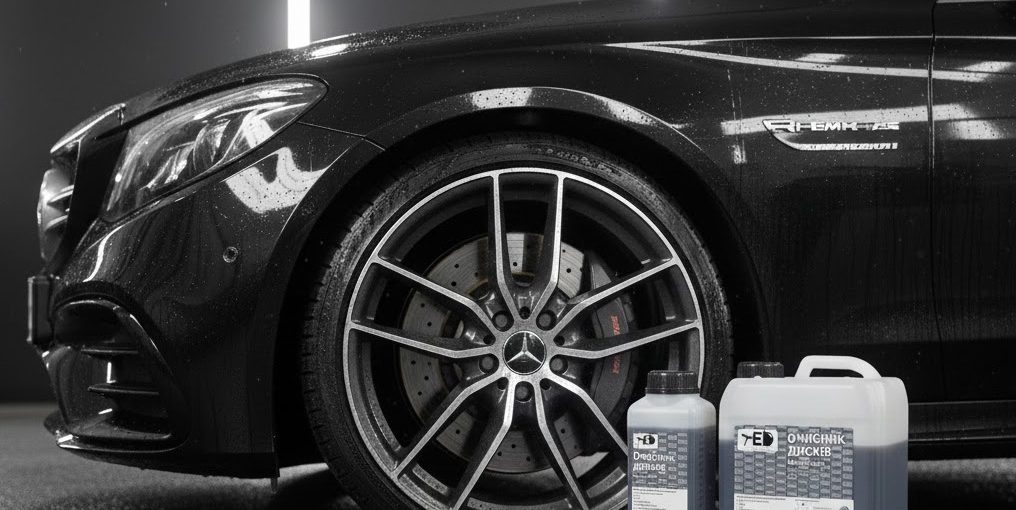
Wheel rims are one of the most heavily loaded and chemically vulnerable areas of a car, as this is where brake dust, metal oxides, road chemicals, and bitumen residue constantly accumulate. Due to a combination of high temperatures, humidity, and aggressive contaminants, the surface of the wheels gradually loses its protective properties, making it much more difficult to clean them with ordinary cleaning products. That is why a specialized wheel cleaner is an essential part of both professional and at-home car care. However, the key issue lies in choosing correctly between an acidic and a non-acidic formula, since each type operates on a different chemical principle and has its own safety restrictions. Choosing the wrong product can not only reduce cleaning effectiveness but also damage the wheel finish and adjacent components of the braking system.
The Chemical Nature of Contaminants and How Cleaners Work
Most of the contamination on brake discs consists of brake dust, which is made up of fine particles of iron, copper, and organic resins formed by the friction between the brake pads and the disc. When exposed to moisture and oxygen, these particles oxidize rapidly and become firmly bonded to the surface of the paint or metal, forming a stubborn film that is difficult to remove mechanically. Additionally, salts and chemicals used in winter, as well as mineral deposits from water, accumulate on the wheels, exacerbating corrosion. That is why an effective car wheel cleaner must not only wash away dirt but also chemically break the bonds between the contaminants and the surface. The difference between acidic and non-acidic cleaners lies in how they achieve this result and the extent of their impact on the materials.
Acid-based cleaners work by causing acids to react with metal oxides, which causes solid deposits to dissolve and be easily rinsed away with water. This mechanism ensures high speed and efficiency even with stubborn deposits, but requires strict control of contact time and surface temperature. Acid-free formulas, on the other hand, use chelating agents and surfactants that gradually encapsulate metal particles and separate them without an aggressive chemical reaction. For this reason, acid-free wheel cleaners are considered safer for regular use, although they require a longer exposure time. The choice between these two approaches should always be based on the type of wheels, the degree of contamination, and the vehicle’s operating conditions.
Acid Wheel Cleaner: Benefits, Risks, and Limitations
Acidic Wheel Cleaner – 1:3 (concentrate)
Price range: from 330 ₴ to 1,160 ₴Select options This product is available in several variations. You can select the options on the product page.
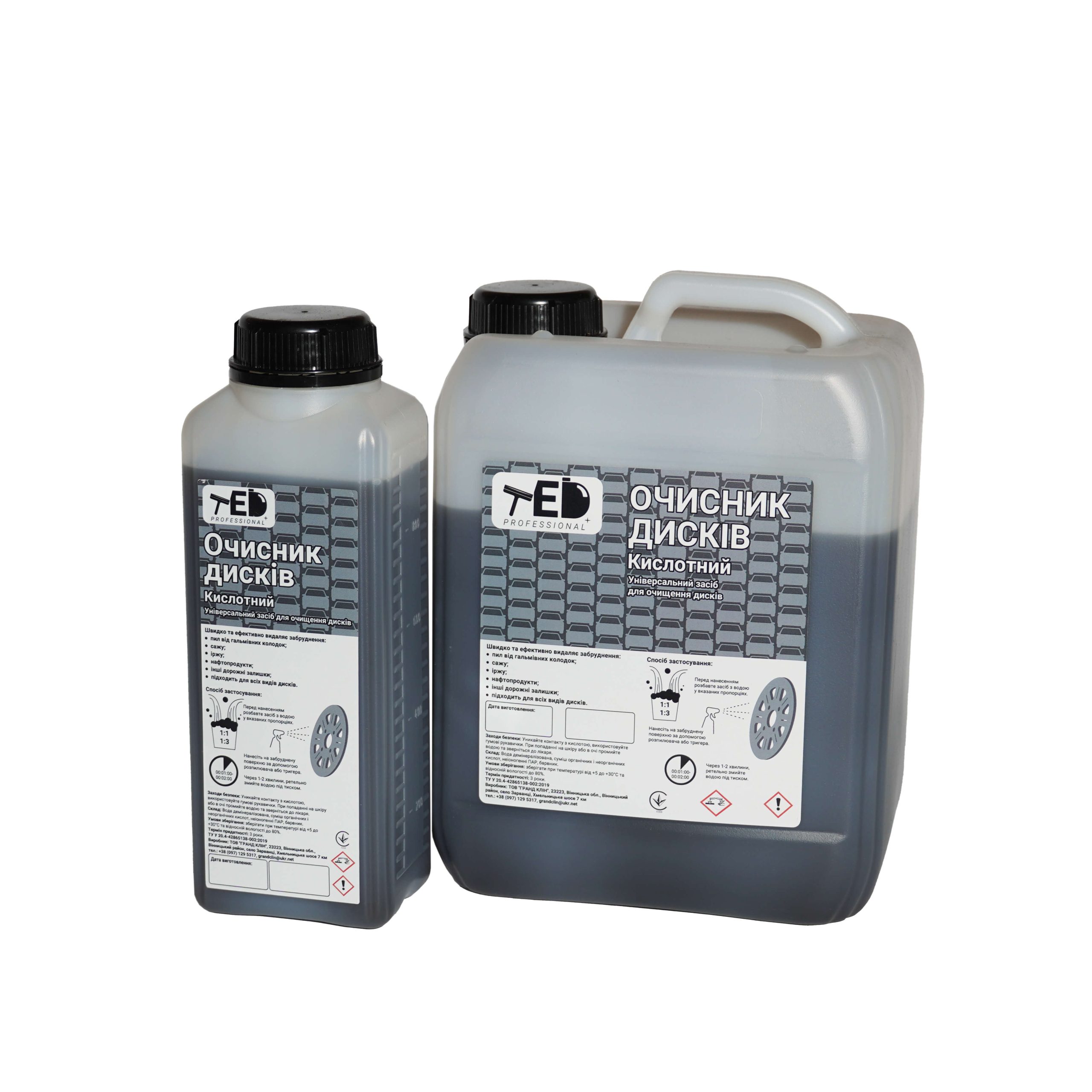
Acid wheel cleaners are traditionally used in professional car washes to quickly restore heavily soiled and long-neglected wheels. Their main advantage is their ability to effectively dissolve iron oxides, calcium deposits, and old brake dust without intense mechanical action. However, the high reactivity of acids means that improper use can lead to paint damage, surface dulling, or even localized corrosion. Polished, chrome-plated, and decorative wheels with a thin protective layer are particularly sensitive to such products. That is why an acid wheel cleaner should be used exclusively on a cool surface, strictly following the manufacturer’s instructions.
From a technical standpoint, acidic cleaners are appropriate in cases where acid-free formulas no longer deliver the desired results or require excessive effort. They are often used as a preparatory step before painting or restoring wheels, where maximum cleanliness is critical. However, for regular maintenance, the use of acid-based cleaners is economically and technically impractical, as the risks outweigh the potential benefits. That is why professional technicians recommend using them sparingly and only if you have the appropriate experience. In all other cases, it is worth considering gentler alternatives.
Acid-free wheel cleaner: the best solution for regular maintenance
Acid-free wheel cleaners are designed to meet the needs of regular maintenance and to preserve the appearance of wheels throughout their entire service life. Thanks to the use of chelating agents, they selectively bind metal ions without causing aggressive reactions with paint or metal alloys. This allows you to safely clean even expensive wheels with decorative coatings without the risk of dulling or losing their shine. An additional advantage is their compatibility with ceramic and wax protective coatings, which is especially important for modern cars. That is why acid-free wheel cleaners are considered a universal solution for most car owners.
From a technical standpoint, acid-free formulas work more slowly, but they make up for this with consistent results and a high level of safety. Their use reduces the need for mechanical abrasion, which directly helps minimize the number of micro-scratches. With regular use, these products not only clean but also slow down the re-accumulation of brake dust. This makes them the optimal choice for both personal use and detailing studios. Overall, an acid-free cleaner is the logical standard for modern wheel care.
Professional Recommendations for Selection and Use
The choice between an acidic and a non-acidic disc cleaner should be based not on how quickly it works, but on long-term safety and the preservation of the materials. For new, well-maintained, or protected discs, it is always better to use non-acidic products on a regular basis. Acidic formulas should be reserved for difficult cases where other methods are ineffective. In any case, cleaning should be performed on cool wheels, and any chemical residue must be thoroughly rinsed off. Adhering to these principles ensures the cleanliness, safety, and long service life of your wheels.
Conclusions from the experts
Acid-based and acid-free wheel cleaners are not interchangeable products; rather, they serve different purposes. Choosing the wrong product can damage the finish and result in additional restoration costs. That is why a thoughtful approach to wheel care is key to preserving their appearance and functionality. Regular use of acid-free formulas, combined with proper washing protocols, is the safest solution. This approach meets modern standards for professional car care.
Acidic Wheel Cleaner – 1:3 (concentrate)
Price range: from 330 ₴ to 1,160 ₴Select options This product is available in several variations. You can select the options on the product page.
Frequently Asked Questions
Can I use an acid-based disc cleaner on a regular basis?
No, acidic cleaners are recommended only for heavy and stubborn stains, as regular use can damage the wheel finish.
Which wheel cleaner is safer for new cars?
For new cars, an acid-free wheel cleaner is the best choice, as it effectively removes dirt without risking damage to the paint.
Do acid-free cleaners work against brake dust?
Indeed, modern acid-free formulas contain chelating agents that effectively bind the metal particles in brake dust.
Can you use an acidic and a non-acidic cleaner together?
Professional protocols allow for step-by-step application, but only if the exposure time is observed and the product is thoroughly rinsed off.