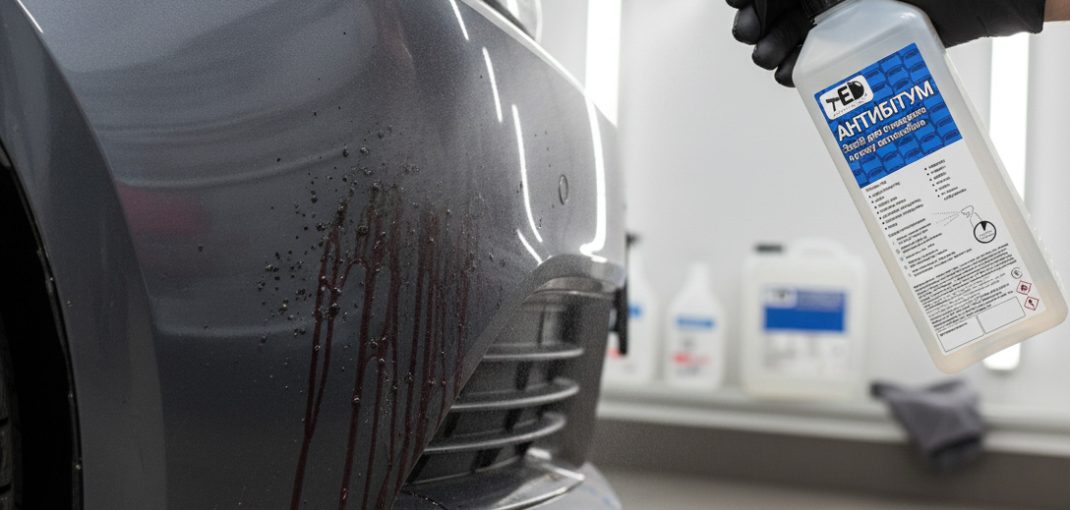
An anti-bitumen product is an essential part of car care in both urban and highway driving conditions, as road bitumen adheres strongly to the paint finish and quickly accumulates on the car’s body. At the same time, improper use of even a high-quality product can lead to paint dullness, damage to the top protective layer, or the appearance of localized surface defects. That is why using an anti-bitumen product requires an understanding of its chemical action, operating conditions, and limitations that ensure safety for modern automotive coatings.
An Expert's Personal Experience: The Fine Line Between Cleaning and Damaging LFP
Over the years I’ve worked with professional automotive chemicals, I’ve seen time and again how improperly used anti-bitumen products can cause paint to become cloudy, develop dull spots, and even result in micro-damage to the paint finish. Most often, the problem isn’t with the product itself, but rather with using too high a concentration, leaving it on for too long, or applying it to a hot surface. That is precisely why a high-quality anti-bitumen product requires proper application—only then will it effectively remove bitumen stains while remaining completely safe for the vehicle’s paint finish.
A real-life case study:
One day, a customer driving a dark blue car came to us after trying to remove fresh bitumen on his own under the scorching summer sun. He applied the product and left it to “work” while he went into the garage to get some water. Due to the high temperature, the solvent began to evaporate too quickly, and the aggressive components “etched” into the top layer of the clear coat, leaving whitish streaks.
My conclusion as an expert:
Temperature is critical: Never work on a hot truck bed; the surface must be cool to the touch.
Time Management: It's better to apply the product twice for 1 minute each than once for 5 minutes.
Constant monitoring: You should watch for the bitumen to start “melting” and running off—this is a sign that it’s time to rinse it off.
How does anti-bitumen work, and why is it effective against road grime?
Bitumen stains consist of high-molecular-weight hydrocarbons, resins, and asphaltenes, which become plastic when the road surface is heated and are easily transferred to the vehicle’s body. Once cooled, these compounds bond firmly to the paint, forming a durable film that cannot be removed with conventional cleaning agents due to the lack of a soluble interaction. This is precisely why standard washing is ineffective, and the problem requires a specialized approach.
Bitumen removers work on the principle of chemical dissolution, whereby organic solvents and surfactants penetrate the structure of the bitumen and weaken the intermolecular bonds, loosening the contaminants. As a result, anti-bitumen products for cars allow you to remove stubborn stains without the need for mechanical scrubbing, which is critical for preserving the integrity of the paint finish.
Why Improper Use of Anti-Bitumen Harms the Paint Finish
The main danger of anti-bitumen lies not in its composition, but in improper application conditions, when the active ingredients interact with the varnish more intensely than specified in the instructions. Damage most often occurs when the recommended contact time is exceeded, as prolonged exposure to solvents can soften the top layer of the varnish. As a result, the surface loses its gloss and becomes susceptible to further mechanical stress.
Applying anti-bitumen to a hot car body poses a particular danger, as the elevated temperature significantly accelerates chemical reactions and increases the aggressiveness of the product. That is why, when washing a car in the summer, the risk of damaging the paint finish increases several times over if temperature restrictions are ignored. Under such conditions, even brief contact can lead to localized defects in the paint finish.
Vehicle preparation as a key step in the safe use of anti-bitumen
Antibitum – a bitumen and resin cleaner
Price range: from 451 ₴ to 1,994 ₴Select options This product is available in several variations. You can select the options on the product page.
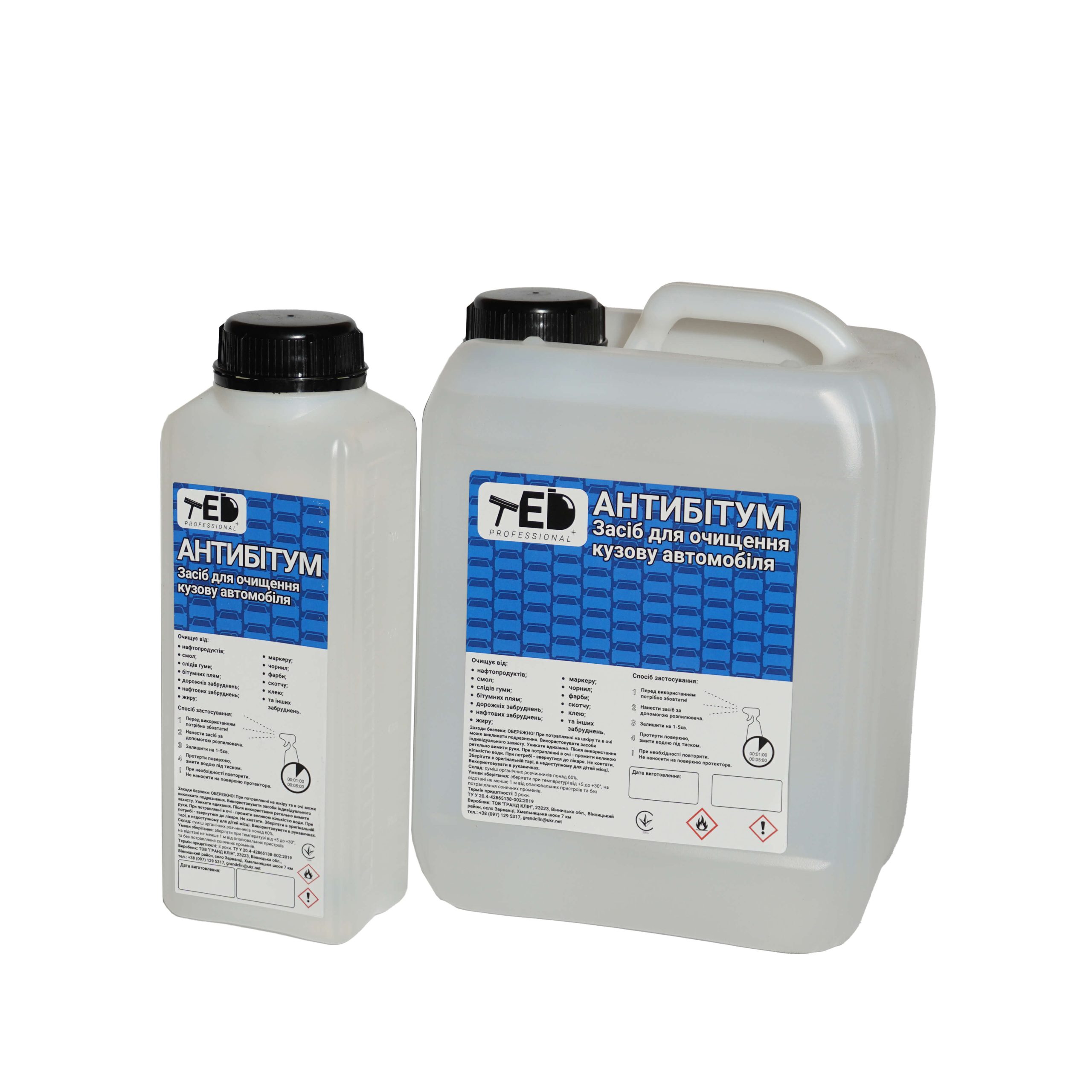
Before applying the anti-bitumen treatment, the vehicle must undergo a thorough preliminary wash, as dust, sand, and road grit pose an additional risk of damaging the paint. Using active foam at car washes helps remove surface contaminants and minimize contact between solid particles and the paintwork. This step directly affects the safety of subsequent chemical treatment.
It is also important to consider the type of surface, as matte varnishes, ceramic coatings, and protective films have different levels of chemical resistance. For such areas, it is recommended to use an anti-bitumen product that is safe for paint and varnish materials, has controlled dissolving power, and poses a reduced risk of interacting with delicate protective layers.
Safe Practices for Using Anti-Bitumen in Real-World Applications
Anti-Bitumen should be applied locally, exclusively to areas with bitumen stains, taking care to avoid excessive wetting of the surface and contact with non-target materials. The optimal exposure time is usually one to three minutes, as this is the time frame during which the stain is effectively dissolved without adversely affecting the paint finish.
Once the reaction is complete, the product must be thoroughly rinsed off with pressurized water, and, if necessary, a soft microfiber cloth should be used without applying any pressure. Following the manufacturer’s recommendations for TED Professional anti-bitumen ensures consistent results, completely removing contaminants while preserving the original condition of the asphalt surface.
Protecting the Paint Finish After Removing Bitumen
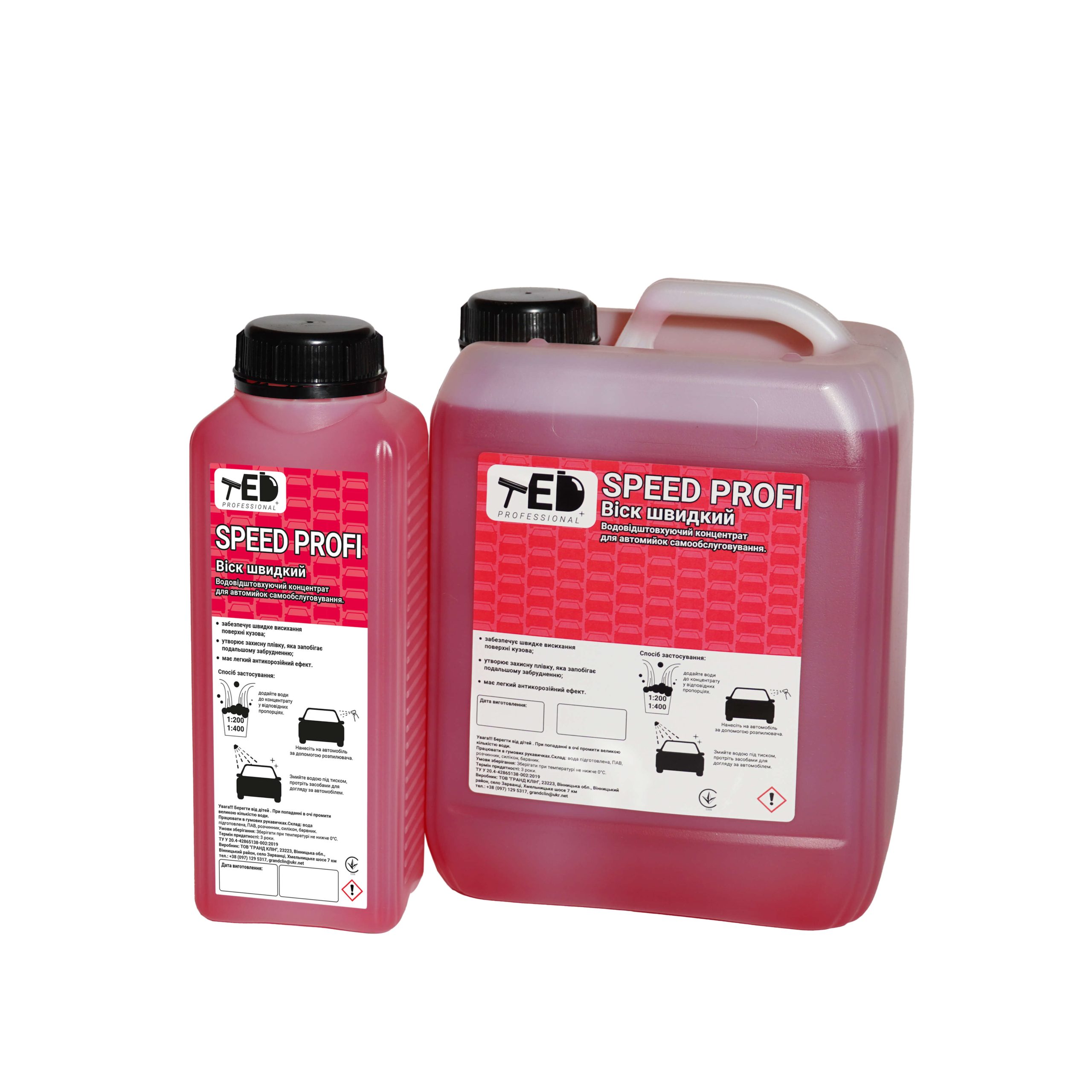
Keep in mind that anti-bitumen partially removes wax and silane coatings, since their chemical composition is similar to the organic compounds that the product dissolves. That is why, after treatment, it is recommended to restore the protective layer using a quick-dry car wax, which restores the surface’s water-repellent properties and reduces the adhesion of new contaminants.
Speed Profi 1:400 Wax – Fast-Setting Wax
Price range: from 390 ₴ to 2,583 ₴Select options This product is available in several variations. You can select the options on the product page.
Conclusions from TED Professional Experts
The safe use of anti-bitumen is based on a combination of a high-quality product, strict adherence to the application process, and an understanding of the physical and chemical processes involved. Ignoring these factors leads to damage, while the correct approach ensures effective cleaning without risks. By using TED Professional anti-bitumen, you achieve predictable results and keep your paint and clear coat in perfect condition.
Frequently Asked Questions
Can anti-bitumen damage the paint finish?
Yes, but only if used incorrectly: exceeding the recommended contact time, applying it to a hot car body, or causing mechanical friction.
How long can anti-bitumen be left on the truck bed?
On average, 1–3 minutes. The exact time is always specified by the product manufacturer.
Is anti-bitumen safe for plastic components?
High-quality anti-bitumen is safe for plastic and glass when used properly.
Do you need to apply a protective coating after using anti-bitumen?
Yes, it is recommended to restore the protective layer using wax or sealant.
How often can anti-bitumen be used?
As needed, but without overdoing it. Regular body protection reduces the frequency of use.
Antibitum – a bitumen and resin cleaner
Price range: from 451 ₴ to 1,994 ₴Select options This product is available in several variations. You can select the options on the product page.